


# Death of Michael Rosenblum
On February 14, 1980, Michael Rosenblum disappeared in Pennsylvania under circumstances that would remain mysterious for more than a decade.
He was last known to be driving away alone in a woman’s car after an argument. Less than an hour later, that car was found abandoned and badly damaged. Yet Michael was nowhere to be found.
For years, his father refused to stop searching.
Then, twelve years after Michael vanished, a fragment of a human skull was discovered in the woods near the place where the abandoned vehicle had been located. Investigators eventually identified the fragment as belonging to Michael Rosenblum.
But even after that discovery, one crucial question remained unanswered:
**What happened to Michael Rosenblum on February 14, 1980?**
His death was never fully explained, and allegations surrounding the police investigation continued to follow the case for years.
—
## Michael’s Background
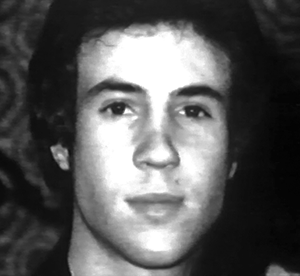
Michael Rosenblum was born in Pittsburgh, Pennsylvania, in 1954. He was the only son of Barbara and Maurice Rosenblum.
As a teenager, Michael struggled with alcohol and drugs. His behavior sometimes brought him into conflict with law enforcement, and some of those encounters reportedly became violent.
At one point, Michael entered treatment at Western Psychiatric Institute. While receiving treatment there, he met Lisa Sharer, a woman from Baldwin who had previously worked as a Playboy Bunny.
The two became involved in a relationship.
By early 1980, however, Michael’s problems with substance abuse were still a serious concern for his family.
At the same time, the Baldwin Borough Police Department was being led by Chief Aldo Gaburri, a man who had already been chief for several years. The department itself would later become a central part of the mystery surrounding Michael’s disappearance.
—
## The Final Day
Michael completed a drug rehabilitation program on January 10, 1980, and returned to his parents’ home.
But on February 13, his mother became concerned that he had started using drugs again. She searched his room and found a container of pills.
An argument followed.
Michael was told to leave the house.
He went to see Lisa Sharer, and the two spent time together at a local nightclub before going back to the home of Sharer’s adoptive mother.
The following morning, Michael was reportedly still experiencing the effects of drugs he had taken the night before. At around 10 a.m., Sharer took him to a hospital because she was worried about his condition.
Michael refused to stay.
Hospital staff reportedly remembered him and did not believe he appeared seriously impaired, although they encouraged him to seek treatment.
Instead, Michael walked away.
Later that morning, Michael, Sharer, and Sharer’s three-year-old daughter left together in Sharer’s Pontiac Sunbird.
Michael had decided to return to his parents’ home. He was also expected to meet a lawyer in downtown Pittsburgh at 12:30 p.m. regarding a speeding-ticket case.
They never made it to either destination.
—
## The Argument at the Gas Station
While Sharer was driving, she struck a curb while turning toward the Homestead Grays Bridge.
Concerned that she may have damaged a tire, she pulled into a gas station on Main Street in West Homestead.
Michael got out of the car too.
He was apparently angry about the driving, and the argument between the two became loud enough that the gas station owner contacted police.
Eventually, Michael decided that he would drive instead.
He got behind the wheel of the Sunbird.
But almost immediately, the vehicle was backed into the guy wire of a telephone pole.
Before Sharer could continue the argument, Michael told her and her young daughter to get out of the car.
They did.
Michael reportedly told them to meet him at his mother’s house.
Instead, Sharer and her daughter hitchhiked back toward Oakland, where Sharer checked herself into treatment again.
At approximately **11:35 a.m.**, Michael drove away alone.
It would be the last confirmed sighting of him alive.
—
## The Abandoned Car
Less than an hour after Michael drove away, Sharer’s Pontiac Sunbird was reported abandoned on East Carson Street.
The area was located along Pennsylvania Route 837, near railroad tracks and a wooded bluff beside the Monongahela River.
At 12:24 p.m., Baldwin police officers Chester Lombardi and Robert Weber arrived.
They found several strange details.
The car’s engine was cold.
The keys were gone.
Both tires on the left side had been destroyed, and the vehicle appeared to have been driven while running on damaged rims.
The inside of the car was also packed with a large number of personal items, including hundreds of photographs.
The officers arranged for the car to be towed.
At the time, no one appeared to know where Michael had gone.
—
## A Missing-Person Investigation Begins
The next day, Lisa Sharer contacted Michael’s mother, Barbara, and told her that Michael had not returned.
Michael’s father, Maurice, initially believed his son might simply return home or call after a short time.
Barbara was more immediately alarmed.
She felt it was unusual for Michael to disappear without telling his family where he was going.
She contacted Pittsburgh police and reported him missing.
Captain Theresa Rocco, who led the missing-persons unit, began searching for Michael.
Maurice launched his own investigation as well.
He contacted Michael’s friends, followed leads across the country, distributed missing-person flyers, and offered a reward for information.
The abandoned Sunbird quickly became an important part of the investigation.
But then a shocking discovery was made.
—
## The Car Had Been Sitting With Baldwin Police
Months after Michael disappeared, the owner of the shop where the vehicle had been stored tried to obtain permission to dispose of it.
Only then did it become clear that the Sunbird had been connected to a missing-person case.
The discovery led Captain Rocco, other investigators, and Maurice Rosenblum to the Baldwin police department.
Police records showed that the car had been in the department’s impound system since the very day Michael disappeared.
The question was obvious:
**Why had Lisa Sharer not been properly informed?**
Chief Gaburri reportedly said he personally had not known the vehicle was there until that day. He also claimed a letter had been sent to Sharer, but suggested it may have been destroyed in a mailbox fire.
A letter dated February 15 was later produced.
Sharer maintained that she had never received it.
Other irregularities later raised additional questions about the notification records and how the vehicle had been handled.
A photograph used in a later newspaper story also reportedly came from one of Sharer’s personal albums that had been inside the car.
Questions began to grow around the investigation.
—
## The Search That Did Not Go Far Enough
A search of the area near the abandoned car was eventually organized.
But the search was limited to a relatively small area between the road and the river.
Some people involved in the search wanted to examine other locations, including wooded land across the road known as the Forty Acres.
According to later accounts, permission to search that area was not granted.
That decision would become extremely important years later.
—
## The Robbery Theory
A week after the search, investigators were told that witnesses to a robbery at a Baldwin drugstore believed Michael might have been the person responsible.
The claim was questionable.
A police composite of the suspect reportedly resembled photographs of Michael that had been distributed throughout the area after he disappeared.
However, when Captain Rocco and Maurice showed photographs of Michael to the robbery witnesses, they reportedly did not identify him as the robber.
A different suspect was eventually found.
That man more closely matched the description and later confessed to the crime.
But the false robbery lead had created another disturbing chapter in Michael’s disappearance.
—
## A Father Who Refused to Stop Searching
As months turned into years, no clear answer emerged.
Maurice Rosenblum became convinced that important information was being withheld.
He increased the reward.
He bought billboard space near the place where Michael’s car had been found.
He followed leads around the country.
He even investigated information provided by psychics and other unusual sources.
On the anniversaries of Michael’s disappearance, Maurice reportedly received anonymous calls.
The callers allegedly claimed that Michael had been arrested by Baldwin police.
But neither caller identified themselves, and the information could not be confirmed.
Maurice continued searching.
For him, the case was never closed.
—
## A New Investigation Into the Baldwin Police
Maurice eventually pushed for investigations by other law-enforcement agencies.
But he was dissatisfied with the results.
Then, in December 1986, an anonymous letter provided a potentially significant lead.
The letter directed the Rosenblum family toward Margaret Haslett, a former state trooper who had later worked as a dispatcher for Baldwin police.
Maurice traveled to speak with her.
According to Haslett, she witnessed Chief Gaburri become extremely angry on the day the missing car was discovered in the police impound system.
She alleged that a letter to Lisa Sharer had been prepared after the fact and backdated to make it appear that police had contacted her shortly after the car was recovered.
Maurice immediately took the information to powerful political contacts and the state attorney general.
A new state investigation followed.
Another department employee reportedly supported parts of Haslett’s account and said he had been instructed to falsify documents.
Maurice initially believed the investigation was making progress.
But eventually, the case was dropped without public charges being brought against Gaburri.
—
## The Police Chief Is Fired — Then Reinstated
In 1987, Maurice wrote directly to the Baldwin Borough Council and asked officials to investigate what he believed had happened.
The council opened an investigation.
A hearing was eventually held.
Witnesses gave conflicting accounts about the allegedly backdated letter and the actions of police officials.
A majority of the council ultimately voted to remove Chief Gaburri from his position.
The council believed his actions had interfered with the search for Michael Rosenblum.
But Gaburri appealed.
Later that year, a civil service commission overturned the decision and reinstated him.
Meanwhile, the employee who admitted falsifying documents was dismissed from the department.
The controversy surrounding the case continued.
—
## The Theory of a Violent Encounter
A retired Pittsburgh investigator named Stephen Tercsak later developed his own theory.
He believed Michael may have encountered Baldwin police shortly after leaving the gas station.
Michael had reportedly fled from police during previous encounters.
Tercsak theorized that Michael may have been chased, stopped, or forced off the road.
He believed a confrontation could have followed.
According to this theory, Michael may have been severely beaten and died as a result.
The theory further suggested that his body may then have been hidden.
It was never proven.
No one was ever convicted in connection with Michael’s disappearance or death.
But the allegations would become a major part of the case.
—
## A Magazine Investigation and Lawsuits
In 1988, Pittsburgh Magazine published an extensive investigation into the case.
The story examined Michael’s disappearance, the police handling of the abandoned car, the alleged falsification of documents, and theories about what might have happened to Michael.
The article created even more controversy.
Two Baldwin police officers filed a libel lawsuit against the magazine and others involved with the investigation, arguing that the reporting had falsely connected them to Michael’s disappearance.
The case was later settled.
The coverage also helped bring Michael’s story to a national audience.
—
## Unsolved Mysteries Brings National Attention
The television program *Unsolved Mysteries* later featured Michael Rosenblum’s case.
The episode included interviews, reenactments, and details about the long-running questions surrounding the Baldwin police department.
After the program aired, an unidentified man contacted the show’s hotline.
The caller claimed that he had been held in the Baldwin police lockup on the night Michael disappeared after being arrested for driving while intoxicated.
He claimed that Michael was also being held there.
According to the caller, Michael appeared to have a gunshot wound to his leg and other injuries that looked consistent with a beating.
He said officers later removed Michael from the lockup.
The caller assumed he was being taken to a hospital.
Baldwin police denied that there were any detainees in the lockup that day and continued to deny having information about Michael’s whereabouts.
The identity and reliability of the anonymous caller could not be confirmed.
—
## A Family Finally Finds Evidence of Death
In 1988, searchers found bone fragments and pieces of clothing in the woods near the Monongahela River.
At first, investigators believed the bones might be human.
They were later determined to be animal remains.
Some of the clothing was reportedly consistent with what Michael had been wearing when he disappeared.
By the end of the decade, Michael’s father had come to believe that his son was dead.
In 1989, Maurice asked a court to legally declare Michael deceased.
The request was granted in early 1990.
Michael had been missing for almost ten years.
Then came the discovery that changed everything.
—
## The Skull Fragment
In April 1992, a hiker made a disturbing discovery in the woods.
The location was in the Forty Acres — the same wooded area that searchers had wanted to examine years earlier.
A fragment of a human skull was found.
The discovery was sent to the county coroner’s office for examination.
In June 1992, investigators confirmed the fragment belonged to Michael Rosenblum.
The identification was made by comparing the remains with distinctive features visible in X-rays taken during his lifetime.
After twelve years, physical evidence had finally connected Michael to the area where he disappeared.
But the discovery still did not answer the biggest question.
**How did Michael die?**
—
## A Mystery That Remains Unsolved
Investigators could not determine the exact cause of Michael Rosenblum’s death.
His family continued to believe that more information was still hidden.
Maurice Rosenblum spent years searching for his son, following leads, challenging authorities, and refusing to accept that the investigation had provided the complete truth.
The disappearance began with an argument at a gas station.
It continued with an abandoned car.
Then came years of questions, missing information, allegations, police controversy, anonymous calls, investigations, media attention, and legal battles.
Finally, twelve years after Michael vanished, a fragment of his skull was discovered in the woods.
But even that did not provide a complete ending.
Michael Rosenblum was found to have died.
**The circumstances surrounding his death, however, were never fully resolved.**
More than four decades later, his case remains a haunting Pennsylvania mystery — one in which the evidence answered one question while leaving another forever behind:
**What really happened to Michael Rosenblum after he drove away on the morning of February 14, 1980?**
This story is based on publicly available information and reported facts. It has been independently written and presented for informational purposes. Images, if any, belong to their respective owners.