
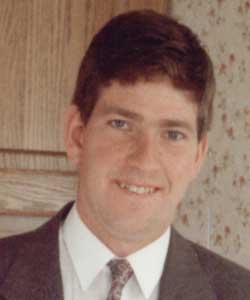


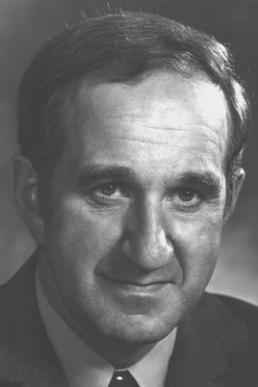
The murders of Russell and Shirley Dermond occurred in early May 2014 in Putnam County, Georgia, United States. The decapitated body of Russell Dermond (age 88) was found on May 6, 2014, in the garage of the house he owned on Lake Oconee. Neither his head nor his wife, Shirley (age 87), could be located in the house. Over a week later, Shirley’s body was discovered floating in Lake Oconee, her body having been weighted down with concrete blocks. As of April 2026, the murders remain unsolved and Russell’s head has not been found.[1]
Background
Russell Joseph Dermond, a native of Hackensack, New Jersey, served in the United States Navy during World War II.[2] He married Shirley Wilcox on December 15, 1950. They went on to have four children and nine grandchildren. After working in the fast food industry, including owning several Hardee’s locations in Atlanta, Russell retired in 1994. The Dermonds went on to move into Great Waters Reynolds at Lake Oconee, a gated community located about twelve miles northeast of Eatonton.[1][3] In 2000, their oldest son Mark was murdered in Atlanta while attempting to purchase crack cocaine. Investigators believe that there is no connection between this crime and the murder of Mark’s parents.[2]
Russell was last seen alive on May 1, 2014, as he was running errands in Eatonton. Along with Shirley, he spoke with his son Brad over the phone later that day. The Dermonds were expected to attend a party for the 2014 Kentucky Derby the following weekend with their neighbors, who grew concerned when the couple did not show up. On May 6, one neighbor went to the Dermonds’ house to check on them.[3] The neighbor found the door unlocked and entered the house. Russell’s decapitated body was found on the floor of his two-car garage, lying in a small pool of blood.[1] When police were unable to locate Shirley inside the house, they initially suspected that she had been kidnapped.[4] Ten days later, Shirley’s body was found by fishermen on Lake Oconee. An autopsy found that she had died from either two or three deep wounds to the head from a blunt object.[5]
Investigations
Initially, investigators were pursuing multiple potential leads to find the perpetrator(s) and their motive for killing the Dermonds. However, this eventually led nowhere, and over time the leads gradually declined in frequency.[4] Although the perpetrator(s) and motive remain unknoDiscovery of the carwn, Putnam County Sheriff Howard Sills has said he is convinced that multiple people were involved. Because gunshot residue was found on Russell’s collar,[5] Sills believes he was decapitated after having been shot in the head in an attempt to prevent police from finding the bullet,[6] and that the perpetrator(s) went to the Dermonds’ home intending to obtain money, despite the fact that nothing in the home was stolen.
Discovery of the car
Evidence inside the car suggested the men were in it between the time they were last seen and when it was abandoned. Empty wrappers and containers from the food and drinks they purchased from the store in Chico were present, along with programs from the basketball game they attended and a neatly folded road map of California.[3]
The car’s location, 70 miles (110 km) from Chico, was far from any direct route to Yuba City or Marysville. None of the men’s families could speculate as to why they would drive up a long and winding dirt road[a] on a winter night deep into a high-elevation remote forest, without extra clothing. Madruga’s parents said he did not like cold weather and had never even been up into the mountains. Sterling’s father had once taken his son to the area near where the car was found for a fishing weekend, but the younger man had not enjoyed it and remained at home when his father took later trips there.[3]
Police were puzzled by the car’s abandonment. The road was at 4,400 feet (1,300 m) in elevation, about the location of the snow line that time of year, a short distance from where the road was closed for the winter. The car had become stuck in snow drifts, and there was evidence that the men tried to spin the wheels to get out of it; police noted that the snow was not very deep and that five healthy young men should have easily been able to push the car out.[3] The car keys were not present, suggesting at first that the car had been abandoned because it might not have been operating properly, with the intention of returning later with help; when police hot-wired the car, the engine started immediately and the fuel gauge indicated the tank was one-quarter full of gasoline.[3]
Police towed the car back to the station for a more thorough examination. The Mercury’s undercarriage had no dents, gouges or even mud scrapes, not even on its low-hanging muffler, despite having been driven a long distance up a mountain road with many bumps, ruts and potholes. Either the driver had been extremely careful or it was someone familiar with the road, a familiarity Madruga was not known to have; his family said that Madruga would not have let someone else drive the car.[3] The car was unlocked and had a window rolled down when it was found; Madruga’s family indicated it was unlike him to leave the car so unsecured.[8]
Efforts to search the vicinity were hampered by a severe snowstorm that day. Two days later, after searchers in snowcats nearly became lost themselves, further search efforts were called off due to continuing bad weather. Other than the car, no trace of the men was found.[3]
Sightings
In response to local media coverage of the case, police received several reports of some or all of the men being sighted after they had left Chico, including some reports that they were elsewhere in California or the country. Most reports were easily dismissed, but two sightings stood out. Joseph Schons of Sacramento told police he inadvertently wound up spending the night of February 24–25 near where the Montego was found. He had driven up there, where he had a cabin, to check the snowpack before a weekend ski trip with his family. At 5:30 p.m., about 150 feet (46 m) up the road, Schons, too, had gotten stuck in the snow. While trying to free his car, he realized he was beginning to experience the early symptoms of a heart attack and went back in, keeping the engine running to provide heat.[7]
Six hours later, lying in the car and experiencing severe pain, Schons saw headlights behind him. He saw a car parked behind him, headlights on, with a group of people around it, one of whom seemed to him to be a woman holding a baby. He called to the party for help, but they stopped talking and switched their headlights off. Later, he saw more lights behind him, this time flashlights, that also went out when he called to them.[3][7]
After that, Schons said at first, he recalled a pickup truck briefly parking 20 feet (6 m) behind him, and then continuing down the road. Later, he clarified to police that he could not be sure of that, since at the time he was almost delirious from pain. After Schons’ car ran out of fuel in the early morning hours, his pain subsided enough for him to walk 8 miles (13 km) down the road to a lodge, where the manager drove him home, passing the abandoned Montego at the place from where he had recalled hearing the voices. Doctors later confirmed that he had, indeed, experienced a mild heart attack.[3][7]
Weiher’s mother said ignoring someone’s pleas for help was not like her son, if indeed he had been present. She recalled how he and Sterling had helped someone they knew get to the hospital after overdosing on Valium.[7]
The other notable report was from a woman who worked at a store in the small town of Brownsville, 30 miles (48 km) from where the car had been abandoned, which the men would have reached had they continued down the road.[9] On March 3, the woman, who saw fliers with the men’s pictures and information about a $1,215 ($6,000 in 2025)[10] reward the families offered, told deputies that four of them stopped at the store in a red pickup truck the day after the disappearance. The store owner corroborated her account.[7]
The woman said she immediately realized that the men were not from the area because of their “big eyes and facial expressions”. Two of the men, whom she identified as Huett and Sterling, were in a telephone booth outside, while the other two went inside. The police said she was “a credible witness” and they took her account seriously.[7]
Additional details came from the store owner, who told investigators that men whom he believed to be Weiher and Huett came in and bought burritos, chocolate milk and soft drinks. Weiher’s brother told the Los Angeles Times that while driving to Brownsville in a different car in apparent ignorance of the basketball game seemed completely out of character for them, the owner’s description of the two men’s behavior seemed consistent with them, as Weiher would “eat anything he could get his hands on” and was often accompanied by Huett more than any of the other four.[7] Huett’s brother said Jack hated using telephones to the point that he would answer calls for Jack whenever he received any from the other men in the group.[8]
Discovery of bodies
With the evidence not pointing to any clear conclusion about what happened the night the five men disappeared, police and the families were not ruling out the possibility that they had met with foul play.[5] The eventual discovery of four of the five men’s bodies seemed to suggest otherwise, but raised more questions about what happened that night, and whether at least one of them might have been rescued.[6]
On June 4, with most of the higher-elevation snow melted, a group of motorcyclists went to a trailer maintained by the USFS at a campsite off the road about 19.4 miles (31.2 km) from where the Mercury had been found. The front window of the trailer was broken. When they opened the door, they were overcome by the stench of a decomposing body inside. It was later identified as Weiher’s.[3]
Searchers returned to Plumas, following the road between the trailer and where the Mercury was abandoned. The following day, remains later identified as those of Madruga and Sterling, were discovered on opposite sides of the road 11.4 miles (18.3 km) from where the car had been. Madruga’s body had been partially consumed by scavenging animals; only bones remained of Sterling, scattered over a small area.[3] Autopsies showed that they both died of hypothermia. Deputies speculated that one of them may have given in to the need to sleep that comes with the last stages of hypothermia, while the other stayed by his side and died the same way.[8]
Two days later, as part of one of the other search parties, Huett’s father found his son’s backbone[3] under a manzanita bush[8] 2 miles (3.2 km) northeast of the trailer. His shoes and jeans found nearby helped identify the body. The next day, a skull was discovered by a deputy sheriff 300 feet (91 m) away from the bush, confirmed by dental records later to be Huett’s.[3] His death was also attributed to hypothermia.[8]
Around a quarter-mile (400 m) northwest of the trailer, searchers found three Forest Service blankets and a rusted flashlight next to the road. It could not be determined how long those items had been there. Since Mathias had presumably not taken his medication, his photograph was distributed to mental institutions all over California. However, no trace of Mathias has ever been found.[3]
Evidence in trailer
Weiher’s body, wrapped in eight sheets including the head, was found on a bed, inside the trailer. An autopsy showed that he died of a combination of starvation and hypothermia. Weiher had lost nearly half his 200 pounds (91 kg); the growth of his beard suggested he lived slightly more than three months from when he last shaved. His feet were badly frostbitten,[3] almost gangrenous.[8] On a table next to the bed were some of Weiher’s personal effects, including his wallet (with cash), a nickel ring with “Ted” engraved on it and a gold necklace he also wore. Also on the table was a gold watch, missing its crystal, which Weiher’s family said was not his,[3] and a partially melted candle.[8] He was wearing a velour shirt and lightweight pants, but his shoes could not be found.[3]
Most puzzling to the investigators was how Weiher had come to his fate. The trailer’s fireplace had not been used despite an ample supply of matches and paperback novels to use as kindling. Heavy forestry clothing, which could have kept the men warm, also remained where it had been stored. Three dozen C-ration cans from a storage shed outside had been opened and their contents consumed[11], but a locker in the same shed that held an even greater assortment of dehydrated foods, enough to keep all five men fed for a year if necessary, had not even been opened. Similarly, another shed nearby held a butane tank with a valve that, had it been opened, would have fed the trailer’s heating system.[3]
Weiher’s family said that he lacked common sense as a result of his cognitive disability. For example, he often asked why it was necessary to stop at a stop sign, and one night had to be dragged out of bed while the ceiling of his bedroom was burning in a house fire, because he was afraid he would be late for work if he did not get enough sleep.[12]
It also appeared that Weiher had not been alone in the trailer, and that Mathias had also been there. Mathias’s tennis sneakers were in the trailer, and the C-rations had been opened with a P-38 can opener, with which only Mathias or Madruga were familiar from their military service. Mathias, his feet perhaps also swollen from frostbite, could have decided to put Weiher’s shoes on instead if he had ventured outside.[3] The sheets covering Weiher’s body also suggested that one of the others had been there with him, as his gangrenous feet would have caused too much pain for him to pull them over his body himself.