

For almost four decades, an unidentified teenage girl was remembered only by the nickname “Valentine Sally.”
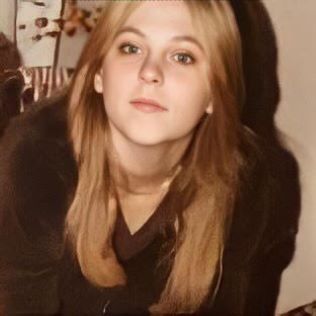
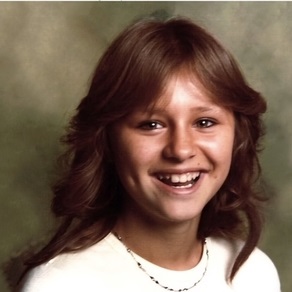
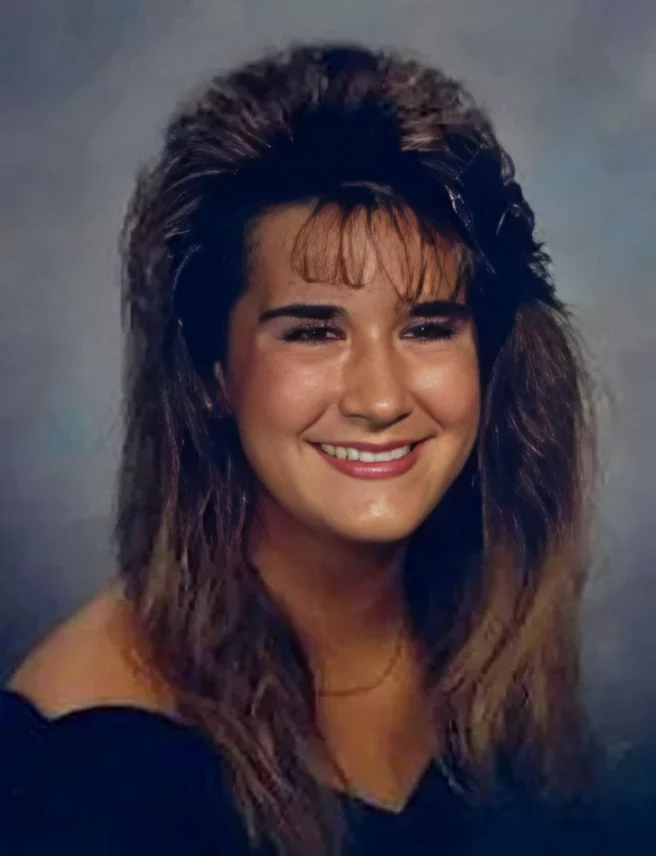
Her real name was Carolyn Celeste Eaton.
In February 1982, the body of a young woman was discovered beside Interstate 40 near Williams, Arizona. She had no identification with her, and investigators initially had very few clues about who she was or how she had ended up there.
The case eventually became a decades-long cold case.
It took 39 years and the use of genetic genealogy before investigators were finally able to give Valentine Sally her identity back.
The Discovery
On February 14, 1982—Valentine’s Day—an Arizona state trooper was searching for a truck tire that had come off a passing vehicle.
Instead, he discovered the decomposing body of a young woman lying beneath a cedar tree near Interstate 40.
The location was around mile marker 151.8 near Williams, Arizona.
She was wearing only a few pieces of clothing. Investigators found her dressed in blue jeans, a white sweater with thin red or maroon stripes, and a white bra. A white handkerchief was also discovered nearby.
Her jeans had damaged belt loops, leading investigators to believe that she may have been dragged roughly 25 feet away from the roadway.
There were no shoes or socks at the scene.
At that moment, investigators had no idea who she was.
Who Was Valentine Sally?
The victim appeared to be a young woman, approximately 5 feet 4 inches to 5 feet 5 inches tall, weighing around 120 to 125 pounds.
Witnesses who had seen her alive described her eyes as blue.
She had relatively long hair, approximately 9.5 inches in length, which was described as blonde or strawberry-blonde.
Investigators also documented several identifying marks on her body, including scars on her left foot and lower thigh, along with moles on her chest.
Her dental condition provided another important clue.
One of her lower molars had recently been prepared for a root canal. Investigators found evidence of aspirin inside the tooth cavity, suggesting that she had still been experiencing pain shortly before her death.
These details would later become important in trying to determine who she was.
What Happened to Her?
Because of the condition of the remains, investigators could not establish the exact cause of death with certainty.
The medical examiner estimated that she had died approximately two weeks before her body was discovered.
There was no major trauma elsewhere on her body, and her hyoid bone had not been fractured. However, investigators believed that suffocation or another form of asphyxiation could have been responsible.
The decomposition and activity from insects and wildlife had also destroyed or affected important evidence.
The case quickly became a difficult mystery.
Who was this girl?
Where had she come from?
And who had been with her before she died?
A Possible Journey Across Arizona
Investigators eventually learned about a possible sighting several days before her body was found.
According to information later documented by the Doe Network, a Northern Arizona University student believed he had given a ride to a young woman matching Valentine Sally’s description near Cordes Junction on February 2.
The girl reportedly said that she had been living and working as a dishwasher in Phoenix with friends.
She also told him that she wanted to travel to New Jersey because of family problems.
Her plan was reportedly to reach the Little America truck stop in Flagstaff and find a truck driver who could take her toward the East Coast.
If the woman was indeed Valentine Sally, this suggested that she may have been traveling through Arizona shortly before her death.
The Last Known Sighting
Two days later, another witness encountered her.
On February 4, Patty Wilkins saw the young woman entering the Monte Carlo Truck Stop near Ash Fork with an older truck driver.
Something about the situation caught Wilkins’ attention.
The girl appeared to be a teenager, while the man accompanying her was considerably older. Wilkins became concerned enough to ask the girl whether she was safe and whether she wanted to remain at the truck stop.
The girl said she wanted to stay with the truck driver.
The man ordered breakfast.
The young woman did not eat, however, because she was suffering from a painful toothache.
Wilkins tried to help her by crushing an aspirin tablet and placing it on the painful tooth.
That seemingly small moment would later become one of the most significant clues in the entire investigation.
When the victim’s remains were examined, investigators found evidence consistent with aspirin having been placed in the same tooth.
It strongly connected the unidentified woman found beside the highway with the teenager Wilkins had encountered at the truck stop.
But the identity of that teenager remained unknown.
The Mystery Deepens
Investigators attempted numerous ways to identify her.
A sketch was produced only a few days after her body was discovered, using Wilkins’ description.
Later, forensic specialists created facial reconstructions using scans of the victim’s skull.
Several reconstructions were eventually produced, including work associated with the National Center for Missing and Exploited Children and artist Carl Koppelman.
Despite these efforts, nobody could confidently put a name to the face.
For years, she remained “Valentine Sally,” a nickname given because her body had been discovered on Valentine’s Day.
A Mistaken Identity
In 1984, investigators thought they had finally solved the mystery.
Valentine Sally was identified as Melody Eugenia Cutlip, a Florida runaway who had been reported missing in 1980.
The identification was based partly on dental comparisons and a facial reconstruction that investigators believed resembled Cutlip.
But Cutlip’s mother strongly disagreed.
She refused to accept that the unidentified remains belonged to her daughter.
Her instincts were correct.
In 1986, Melody Cutlip was found alive and reunited with her family in Florida.
Valentine Sally was still unidentified.
The case had returned to square one.
The Man Seen With Her
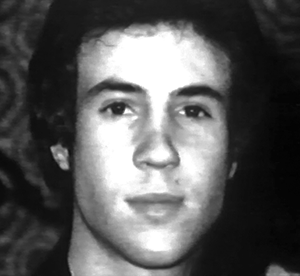
Another major clue involved the truck driver who had been seen with Valentine Sally shortly before her death.
Patty Wilkins described him as a man who appeared to be in his 50s.
She estimated that he was approximately 5 feet 8 inches to 5 feet 10 inches tall and had a medium build.
He reportedly wore a distinctive two-tone checker-patterned leather vest and a black felt cowboy hat decorated with a peacock feather.
Investigators later produced a sketch based on Wilkins’ description.
Over the years, some online investigators suggested that the description might resemble suspected serial killer Royal Russell Long.
However, investigators never established a confirmed connection between Long and Valentine Sally’s murder.
Long was imprisoned for other murders and died in 1993 without confessing to Eaton’s killing.
The identity of the truck driver remained an unanswered question.
Genetic Genealogy Changes the Case
In 2005, the case was assigned to the Cold Case Squad of the Coconino County Sheriff’s Office.
The team included investigators with law-enforcement backgrounds, including Chuck Jones, Jana White, and Joe Sumner.
The case remained active for years.
Then investigators began looking at a relatively new technique that was changing the way unidentified people and cold cases were being solved:
genetic genealogy.
The same general investigative approach had helped identify the Golden State Killer.
The team believed that the technique might also work for Valentine Sally.
They worked with genealogist Barbara Rae Venter and submitted DNA from the unidentified victim for genealogical analysis.
Instead of simply looking for a direct identification, investigators searched for genetic relatives whose information could help build a family tree.
Eventually, they found a relative who appeared to be connected to the victim.
Investigators followed that family line back through Missouri and began examining the women connected to it.
Most could be accounted for.
But one young girl had disappeared from the family’s records.
She had reportedly had a history of running away, and juvenile records connected to her disappearance still existed.
The investigators eventually concluded that the missing girl was the person they had known for decades as Valentine Sally.
Finally, A Name
On February 22, 2021, the Coconino County Sheriff’s Office announced the identification publicly.
Valentine Sally was Carolyn Celeste Eaton, a 17-year-old girl from Bellefontaine Neighbors, Missouri.
After nearly four decades, the unidentified teenager finally had a name.
Investigators learned that Carolyn had disappeared after an incident involving her family.
Around Christmas 1981, her family reportedly returned home and found Carolyn with two men they did not know.
An argument followed.
Carolyn then walked out of the house.
She was never seen or heard from by her family again.
Investigators believe she eventually made her way to Arizona, possibly by hitchhiking.
The Search for Answers Continues
Identifying Carolyn solved one of the biggest mysteries in the case, but it did not solve her murder.
Her killer has not been definitively identified.
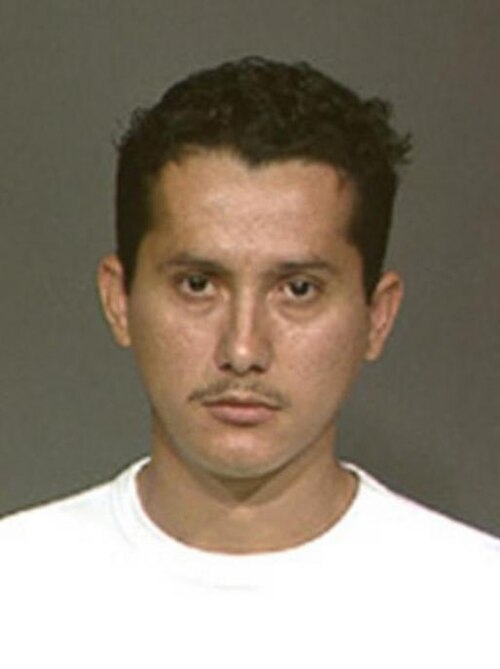
Investigators have continued to pursue information about the older truck driver who was seen with Carolyn shortly before she disappeared.
For decades, Patty Wilkins carried the memory of the teenage girl she had tried to help at the truck stop.
She remembered the girl’s toothache.
She remembered the older man with her.
And she remembered the brief encounter that, unknown to her at the time, would become one of the most important pieces of evidence in a decades-old murder investigation.
Remembering Carolyn
For 39 years, Carolyn Celeste Eaton was known only as Valentine Sally.
Her face appeared in reconstructions.
Her story appeared in missing-person and unidentified-person investigations.
Her family had no certainty about where she had gone.
Then, in 2021, genetic genealogy finally connected the unknown remains to a real family and a real name.
Carolyn was no longer an unidentified victim.
She was a daughter, a family member, and a 17-year-old girl whose life ended far from home.
Her identity has been recovered.
But one question still remains:
Who was the man she was last seen with—and what happened to Carolyn after she left that truck stop?
The investigation into her murder remains ongoing.
This story is based on publicly available information and reported facts. It has been independently written and presented for informational purposes. Images, if any, belong to their respective owners.