



For nearly four decades, one young man’s identity remained unknown.
In 1983, the remains of a young man were discovered at an abandoned farmhouse in Lake Village, Newton County, Indiana. Investigators knew very little about him. He had reddish or auburn wavy hair, stood roughly between 5 feet 11 inches and 6 feet 1 inch tall, and was believed to be somewhere between 17 and 23 years old.
For years, he was simply known as “Brad,” “Victim B,” or “Victim 4.”
It was not until April 2021 that investigators finally learned his real name:
John Ingram Brandenburg Jr.
A Young Man With No Name
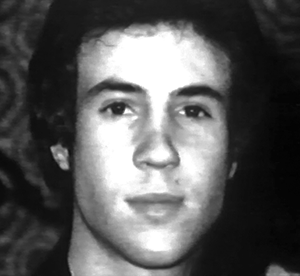
John Brandenburg Jr. was born on February 14, 1964, in Jefferson County, Kentucky.
At the time of his death, he was only 19 years old.
The circumstances surrounding his final days would remain a mystery for decades. John had disappeared from Chicago in 1983, and his family had no idea what had happened to him.
He had reportedly left home to visit a friend.
He never returned.
Meanwhile, investigators in Indiana were trying to identify the remains of an unknown young man discovered at an abandoned farmhouse.
The two stories would not be connected for another 38 years.
The Discovery
John was one of four homicide victims eventually connected to the abandoned farmhouse.
His remains were discovered on October 19, 1983, in Lake Village, Newton County, Indiana.
Investigators estimated that he had been killed several months earlier, around late May 1983.
The victim had suffered fatal stab wounds. His remains had also been dismembered, making identification even more difficult.
Without a name, investigators had to rely on physical clues.
The young man had medium-length reddish or auburn wavy hair and was estimated to weigh between 130 and 180 pounds.
He was also believed to have several dental fillings.
Investigators noticed evidence of an old, serious fracture involving his nose, as well as a previous fracture to his left ankle. Staining on his teeth also suggested that he may have smoked during his lifetime.
The Clothing He Was Wearing
The clothing recovered with the remains provided investigators with additional clues.
He was wearing:
- Brown trousers, approximately size 30×30
- White jockey-style underwear
- Brown leather hiking boots, approximately size 10
The boots were ankle-high and had fleece lining.
But perhaps the most distinctive clues were found on his arm.
The Tattoos That Could Have Held the Answer
The unidentified victim had two tattoos on his right forearm.
Although the tattoos had deteriorated over time, investigators could still recognize their general designs.
One appeared to resemble either a crude Chinese character or a cross accompanied by two circular marks. It was located on the underside of his forearm near the wrist.
The second marking was on the opposite side of the forearm. It appeared rectangular or possibly U-shaped and contained another circular mark.
Because of their crude appearance, investigators considered the possibility that the tattoos might have been made while the young man was in jail or a juvenile detention facility.
For years, these tattoos were among the clues that investigators hoped would eventually lead to his identity.
But they were not enough.
The Connection to Larry Eyler
The case became even more complicated because the killings were later associated with convicted murderer Larry Eyler.
In a posthumous confession, Eyler described what he claimed had happened to the young man.
According to Eyler, he had traveled from his lover’s home in Greenview, Illinois, to the Terre Haute residence of Robert Little.
There, Eyler said he encountered the young man who would later be known as “Brad.”
Eyler claimed that Little told him he had picked the man up somewhere, although he did not reveal exactly where.
Eyler also said that the young man and Little appeared to recognize one another, although he could not determine whether they had actually known each other before.
The young man was allegedly offered money to accompany them to an abandoned farmhouse.
According to Eyler’s account, the victim was promised $100.
What Happened at the Farmhouse
Eyler claimed that once they arrived at the abandoned farmhouse, the young man was restrained.
He said the victim was blindfolded, handcuffed and tied to a wooden post.
Little allegedly took photographs while Eyler removed or adjusted some of the man’s clothing.
Eyler later claimed that the victim appeared to realize something was wrong and resisted.
The young man was eventually stabbed to death.
Afterward, according to Eyler’s confession, the body was dismembered.
Eyler claimed that Little instructed him to remove the victim’s head because Little did not want the killing connected to him.
The head was later reportedly discarded in a dumpster near Terre Haute.
Because Eyler’s confession was made after his death, investigators had to consider his statements carefully. His account provided information about the circumstances of the murder, but it did not immediately solve the victim’s identity.
Decades Without an Identity
For years, investigators referred to the victim simply as Brad.
The unidentified remains became part of a larger effort to determine who the victims were and where they had come from.
Investigators believed the unidentified victims were probably from the Midwest, particularly because the known victims associated with the case had connections to Indiana and Illinois.
Facial reconstructions were created with assistance from the National Center for Missing & Exploited Children.
The process reportedly took about eighteen months.
But even with the reconstructions, the young man’s name remained unknown.
His family was still waiting for answers.
DNA Finally Changes Everything
Modern DNA technology eventually gave investigators a new opportunity.
DNA was extracted from one of the victim’s bones and compared against information available through national public DNA databases.
This effort eventually produced the breakthrough investigators had been waiting for.
In April 2021, nearly 38 years after his remains were discovered, “Brad” was officially identified.
He was John Ingram Brandenburg Jr., a 19-year-old Kentucky native who had disappeared from Chicago in 1983.
A missing young man finally had his name back.
Bringing John Home
The identification was more than the conclusion of a police investigation.
It meant that John’s family could finally learn what had happened to him.
Before his identification, his remains had been buried with the other unidentified victims. A public funeral for two of the victims, including Brad, had been held in Brook, Indiana, in October 2016.
After John’s identity was confirmed in 2021, his remains were returned to Kentucky.
He was later buried at Rest Haven Cemetery in Corbin, Kentucky.
After nearly four decades, John Brandenburg Jr. was finally laid to rest under his own name.
A Mystery That Refused to Disappear
John was only 19 when his life ended.
For his family, however, the disappearance did not truly end in 1983. For decades, there was no grave bearing his name, no confirmed explanation of where he had gone, and no certainty about what had happened to him.
The discovery of his remains answered one question but left many others surrounding the circumstances of his death.
Still, the 2021 identification accomplished something incredibly important.
The unidentified young man known for decades as “Brad” was no longer a John Doe.
He was John Brandenburg Jr.
And after 38 years, his family finally knew where he was.
This story is based on publicly available information and reported facts. It has been independently written and presented for informational purposes. Images, if any, belong to their respective owners.