

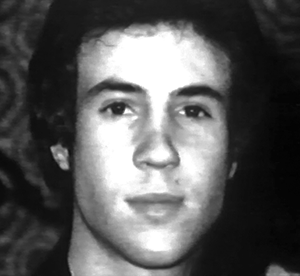
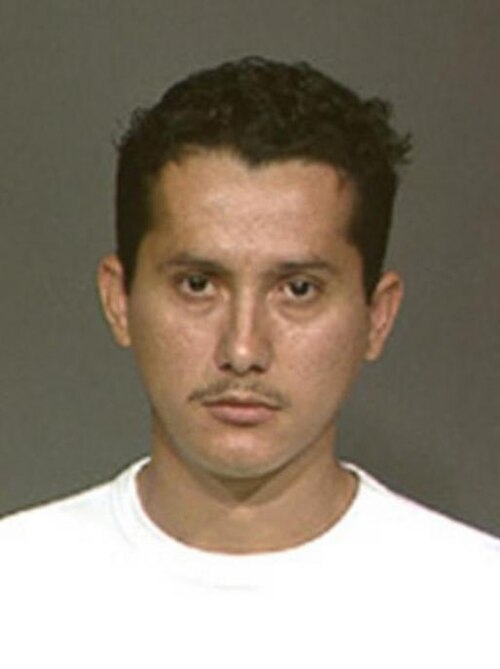

# John William Agrue: The Killer Who Was Identified Years After His Death
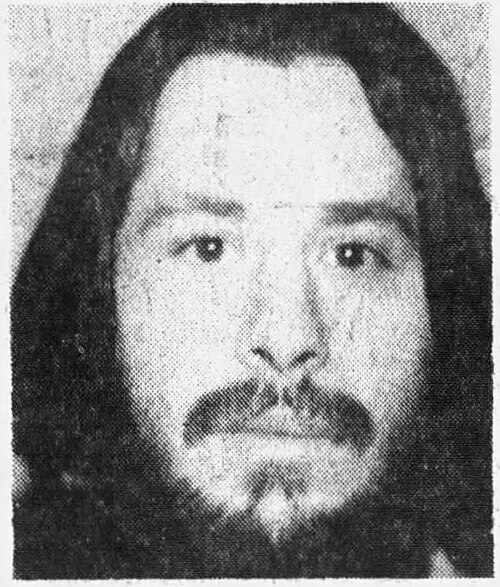
For decades, the name **John William Agrue** was connected to a single murder conviction. But years after his death, DNA evidence and a renewed investigation would lead authorities to identify him as the likely perpetrator of additional killings.
Agrue was born on **September 11, 1947**, and died on **June 29, 2009**. In 1966, when he was only 18 years old, he was convicted of killing his 15-year-old sister-in-law, **Suzanne “Susan” Marino**, in Joliet, Illinois.
After serving years in prison, Agrue was eventually released on parole and moved to Colorado. There, he became connected to two more violent cases, although authorities initially lacked enough evidence to prosecute him for either homicide.
It was not until after his death that forensic testing provided a crucial breakthrough.
## The 1966 Murder of Susan Marino
On **July 21, 1966**, Agrue met his 15-year-old sister-in-law, Susan Marino, in downtown Joliet.
He asked her to accompany him to **Hammel Woods**, a nearby forest preserve. Once they were there, Agrue made romantic advances toward the teenager.
Susan rejected him.
According to investigators, Agrue became angry and attacked her with a knife, stabbing her repeatedly. She suffered approximately a dozen stab wounds and died at the scene.
Later that same day, Agrue told his wife what he had done.
At first, she apparently did not believe him. Agrue then drove her to the area where he had left Susan’s belongings, including her purse and shoes, apparently demonstrating that his confession was genuine.
His wife encouraged him to turn himself in.
Instead, Agrue went to a local church and confessed to a priest. The priest contacted authorities, and Agrue was taken into custody two days after the murder.
During questioning, he admitted killing Susan after she rejected his advances.
The evidence against him was overwhelming. Agrue was convicted and received a **20-to-50-year prison sentence**, which he began serving at Joliet Correctional Center.
## A Hospital Escape
Agrue’s imprisonment later produced another dramatic episode.
In **December 1975**, he was taken to the University of Illinois Hospital in Chicago. He was scheduled to undergo an operation so that he could donate one of his kidneys to his sister, Kathleen.
Because officials were concerned that Agrue might attempt to escape, a large number of prison employees volunteered to help supervise him.
The operation was eventually delayed until **May 4**. Following the procedure, Agrue was supposed to remain in the hospital while he recovered.
That did not happen.
On **May 11**, authorities discovered that he was gone.
Agrue had escaped through a bathroom window and stolen a vehicle. After crossing state lines, he abandoned the car and continued traveling by using fraudulent identification, hitchhiking, and stealing other vehicles.
His reported destination was California.
His freedom lasted only about a week.
After a stolen vehicle was reported, authorities eventually located Agrue in **Central City, Nebraska**. He surrendered without resistance and was returned to Illinois to finish his sentence.
## A New Life in Colorado
Agrue was released on parole in **January 1982**.
Rather than remain in Illinois, he moved to Colorado to stay with relatives. He initially lived in Boulder before eventually settling in Longmont.
Within months, his name would become associated with multiple violent crimes.
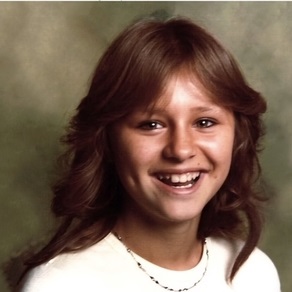
One of the cases involved **20-year-old Susan Becker**.
In late June 1982, Becker encountered Agrue in the Boulder area. She was later found dead in **Boulder Canyon**.
Her body was discovered by fishermen on **July 1**. Investigators determined that she had suffered **13 stab wounds to her torso and neck**.
Agrue was eventually identified as the primary suspect in Becker’s death. However, investigators did not fully pursue the case against him at the time, and the evidence available was not sufficient to establish his guilt.
For years, the murder remained unsolved.
## The Murder of Orma Smith
Only days after Becker’s body was discovered, another killing occurred in Longmont.
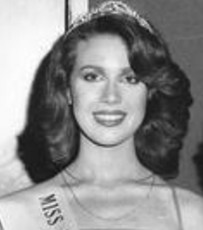
Agrue’s neighbor was **94-year-old Orma B. Smith**, a retired librarian.
Smith was attacked and stabbed to death inside her apartment.
Agrue subsequently disposed of her body in the nearby **Big Elk Creek Meadows**. Her remains were discovered the following day.
Investigators quickly focused their attention on Agrue.
But once again, they faced a major problem: there was not enough concrete evidence to charge him with the murder.
Agrue remained a suspect, but the case could not be successfully prosecuted.
Then, just six days later, he committed another violent offense that finally put him behind bars.
## The Attempted Abduction
Agrue approached a woman on the campus of the **University of Colorado Boulder**.
He was carrying a knife and attempted to abduct her.
This time, police were able to intervene immediately.
Agrue was arrested and jailed.
Although investigators publicly considered him a suspect in Orma Smith’s murder, prosecutors still lacked the evidence necessary to charge him with the killing.
In **March 1983**, Agrue was convicted of the attempted abduction and received a prison sentence. He was subsequently returned to Illinois because of a parole violation.
He remained incarcerated until **1989**, when he was released on parole again.
This time, he stayed in Joliet.
## Years of Suspicion
After his final release, there were no known violent crimes officially connected to Agrue.
However, one of his neighbors later described disturbing behavior. She claimed that Agrue had privately bragged about murders and behaved in ways that made her feel unsafe.
She attempted to obtain a restraining order against him, but the request was denied because he had not personally assaulted or harmed her.
Meanwhile, the murders associated with Colorado remained unresolved.
Then Agrue died.
## Agrue Dies Without Facing the Colorado Murder Charges
On **June 29, 2009**, Agrue was found dead inside his Joliet home.
An autopsy determined that he had died from an accidental overdose involving prescription medication.
After his death, relatives examining the home reportedly discovered women’s purses and jewelry. They also found newspaper clippings concerning the murders of Susan Becker and Orma Smith, as well as the attempted abduction for which Agrue had been convicted.
The discoveries raised additional questions.
Could Agrue have been responsible for more than one killing?
Investigators from a cold-case unit decided to test his DNA against evidence preserved from the Smith murder.
The decision finally produced an answer.
## DNA Solves a Decades-Old Murder
Nearly a year after Agrue’s death, investigators announced that his DNA matched evidence recovered from **Orma Smith’s murder scene**.
The decades-old case was officially considered solved.
Agrue could no longer be prosecuted, but the DNA evidence established a connection between him and Smith’s killing that investigators had been unable to prove during his lifetime.
Attention then turned toward Susan Becker’s murder.
## The Susan Becker Investigation Reopens
The Becker case presented a different challenge.
Unlike the Smith investigation, authorities did not have usable DNA evidence that could conclusively connect Agrue to Becker’s death.
Investigators therefore examined other evidence and looked closely at the similarities between Becker’s murder and Agrue’s other known crimes.
In **May 2013**, authorities announced that Agrue was considered the **sole suspect** in Becker’s murder.
Investigators pointed to similarities between the killings and evidence placing Agrue in the vicinity of the crime.
The FBI’s **Behavioral Analysis Unit** was also consulted. Its assessment concluded that Agrue was highly likely to have been responsible for Becker’s death.
The Boulder County District Attorney’s Office stated that, had Agrue still been alive, prosecutors would have pursued charges against him.
But by then, Agrue had already been dead for several years.
## A Posthumous Serial Killer
The developments surrounding the three cases changed how authorities viewed Agrue’s criminal history.
He had already been convicted of murdering Susan Marino in Illinois.
DNA evidence later established his connection to the murder of Orma Smith in Colorado.
And investigators concluded that there was strong evidence implicating him in Susan Becker’s killing as well.
Because of these findings, Agrue was posthumously identified as a **serial killer**.
Authorities, including state investigators and the FBI, also indicated that other unsolved cases would be reviewed for possible connections to him.
The possibility was unsettling: a man who had already served time for murder had later been released, moved to another state, and become the focus of investigations into additional killings.
Yet the full extent of his crimes remained uncertain.
## No Additional Cases Confirmed
As of **January 2025**, authorities had not officially linked any additional cases to John William Agrue.
His story therefore remains one of a criminal whose confirmed and suspected victims were separated by thousands of miles and decades of investigation.
Susan Marino’s murder led to his original conviction.
Orma Smith’s killing was solved through DNA long after Agrue’s death.
And Susan Becker’s murder remains officially unresolved in court, despite investigators identifying Agrue as the person they believed was responsible.
Agrue died without ever facing prosecution for the Colorado killings.
In the end, modern forensic science answered at least one question that investigators could not solve while he was alive—but it also left behind a much larger question:
**How many other crimes, if any, could have been connected to John William Agrue?**
This story is based on publicly available information and reported facts. It has been independently written and presented for informational purposes. Images, if any, belong to their respective owners.