


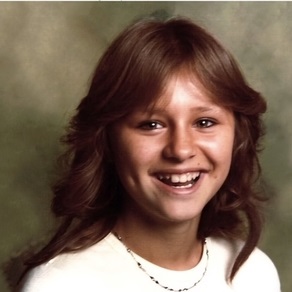
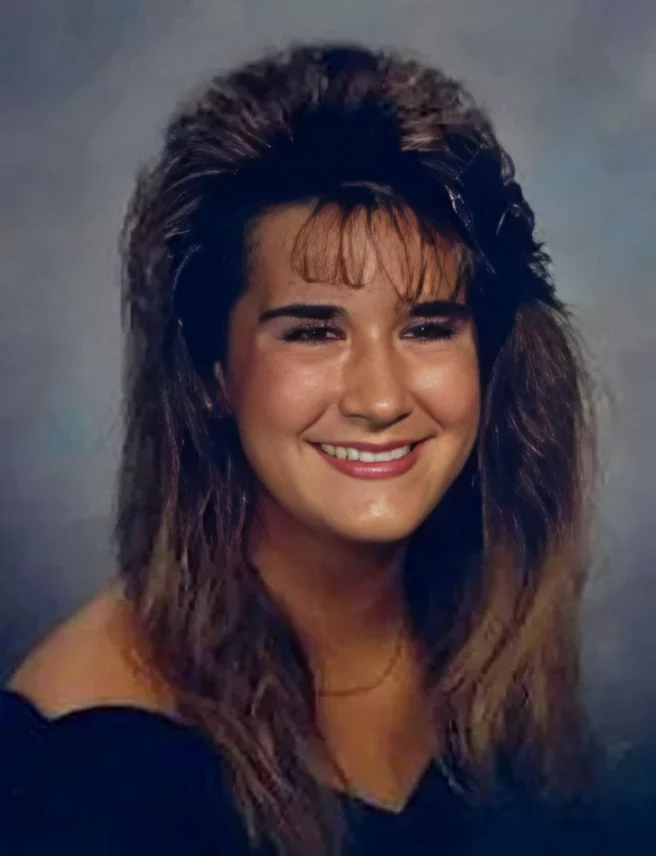
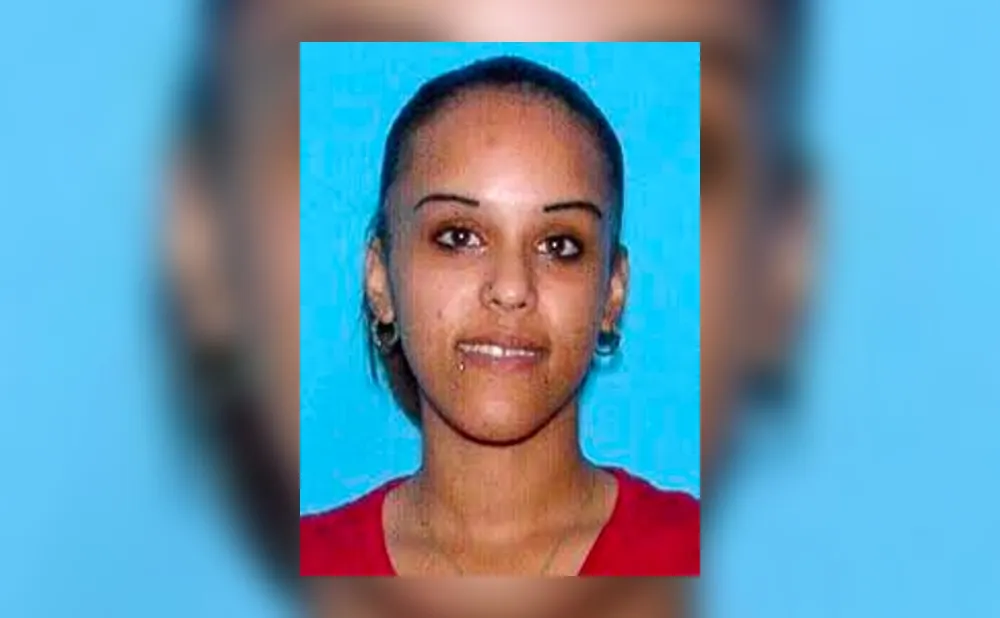

On March 3, 1989, the quiet community of Valley Stream, New York, was shaken by the disappearance and murder of 13-year-old Kelly Ann Tinyes.
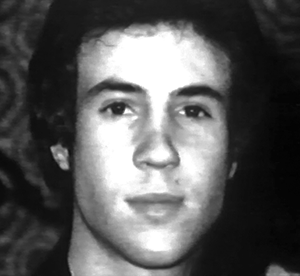
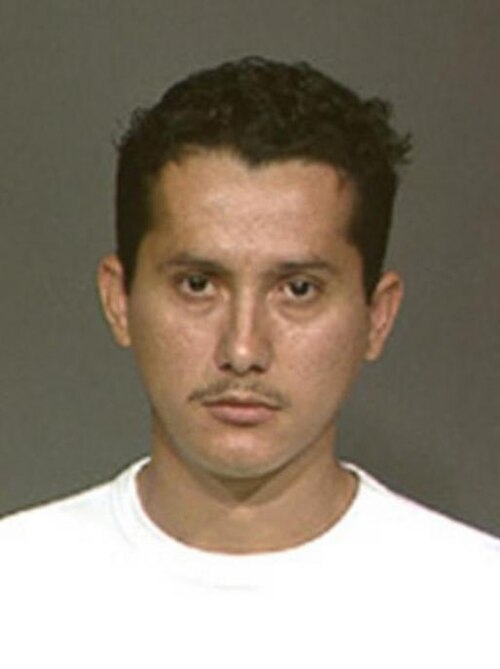
Kelly was found dead inside the basement of a neighboring family’s home after she had briefly left her own house. The investigation eventually focused on 21-year-old Robert Golub, a bodybuilder who lived at the residence. Golub was later convicted of Kelly’s murder.
The case became particularly significant because DNA testing played an important role in securing the conviction. At the time, the use of DNA evidence in criminal trials was still relatively new, making the case one of the earliest major examples of forensic DNA evidence being used in a New York murder conviction.
Kelly Disappears
On the afternoon of March 3, Kelly was at home babysitting her younger brother, Richard.
At some point, the telephone rang. Richard answered and was told that the caller was looking for Kelly. The caller identified himself as “John” and asked to speak with her.
Kelly spoke to the caller. Not long afterward, she told Richard that she was going to visit a friend and expected to return soon.
But she never came back.
Concerned, Richard went to the friend’s home to look for her. The friend said Kelly had not been there. A neighborhood child then told Richard that he had seen Kelly enter the nearby Golub residence.
Richard tried contacting the Golub family and also went to the house, but he was unable to get anyone to respond.
When Kelly’s parents returned home at about 5 p.m., they immediately became involved in the search. A friend of Kelly’s, Sharon Stonel, also reported seeing Kelly enter the Golub home.
The family had no idea that Kelly was already dead.
The Discovery
The following day, two detectives went to the Golub residence and questioned members of the family.
The officers later returned and asked for permission to search the property. After receiving permission from John Golub, the senior member of the family, investigators searched the house.
Their search led them to the basement.
There, they discovered Kelly’s body.
The young girl had suffered horrific injuries. She had been strangled, stabbed, beaten, and mutilated.
The discovery transformed the missing-person investigation into a homicide investigation.
Robert Golub Becomes the Suspect
Investigators eventually focused their attention on Robert Golub, who was 21 years old at the time.
A bloody handprint discovered during the investigation became an important piece of evidence because it was determined to match Golub.
The prosecution also presented blood evidence examined through DNA testing. According to testimony from a supervisor at Lifecodes Corporation, the laboratory that conducted the testing, the results were consistent with Golub.
The laboratory estimated that the probability of the blood belonging to someone other than Golub was approximately one in 707 million.
At a time when forensic DNA testing was still developing, the evidence became a major part of the prosecution’s case.
Questions About the Investigation
Golub’s defense attorney, Salvatore Marinello, challenged several aspects of the prosecution’s case.
He argued that the police search of the Golub residence had not been conducted lawfully. The defense also questioned the reliability of the DNA testing and raised concerns about how the blood samples had been handled and analyzed.
Despite those challenges, the prosecution maintained that the forensic testing was accurate.
Another member of the Golub family, John Golub, was also suspected of possibly having a connection to the crime. However, he was never formally charged in Kelly’s murder.
Conviction
Robert Golub went to trial in late 1989.
After hearing the evidence, the jury found him guilty of second-degree murder.
On April 7, 1990, Golub received a sentence of 25 years to life in prison.
He later attempted to appeal his conviction, but the appeal was unsuccessful.
For years, Golub continued to maintain that he had not intentionally killed Kelly.
A Change in His Account
In 2009, Golub spoke with Newsday and continued to deny responsibility for the murder. He described himself as “tragedy #2,” while referring to Kelly as “tragedy #1.”
But his position changed during a parole hearing in November 2013.
As he approached the end of his 25-year minimum sentence, Golub acknowledged responsibility for Kelly’s death.
According to his account at the hearing, he had accidentally knocked Kelly down a staircase, leaving her unconscious. He then said that he beat her and ultimately stabbed her.
Despite this admission, the parole board rejected his request for release.
The board concluded that releasing him would be incompatible with the welfare of society.
Golub was subsequently denied parole in 2015, 2017, 2019, 2021, and again in 2023.
The Case Is Reopened
Two decades after Kelly’s murder, authorities revisited the case.
On March 3, 2009 — exactly 20 years after Kelly was killed — investigators reopened the case to examine the possibility that another person may have been involved.
The question of whether Golub acted alone remained an important part of the investigation.
The Tinyes Family’s Civil Lawsuit
The tragedy did not end with Robert Golub’s criminal conviction.
In July 1990, Kelly’s family filed a civil lawsuit against members of the Golub family. The lawsuit argued that the family had failed to properly supervise Robert and should share responsibility for what happened to Kelly.
The Tinyes family sought $602 million in damages.
A Case That Became Part of Forensic History
Kelly Ann Tinyes was only 13 years old when her life was brutally cut short.
Her murder devastated her family and community, but the case also became notable for another reason. The DNA evidence presented during Robert Golub’s trial demonstrated how genetic testing could become a powerful tool in criminal investigations and courtroom proceedings.
The case remains remembered not only because of the tragedy suffered by a young girl and her family, but also because it occurred during an important period in the development of forensic DNA evidence.
More than three decades later, questions surrounding Kelly’s murder — including whether another person may have been involved — continue to make the case one of the more disturbing and closely remembered crimes in Valley Stream’s history.
This story is based on publicly available information and reported facts. It has been independently written and presented for informational purposes. Images, if any, belong to their respective owners.