






On December 4, 1972, seven-year-old Steven Stayner left school in Merced, California, expecting to return home like any other afternoon. Instead, he disappeared and would not see his family again for more than seven years.
What happened during those years became one of the most widely remembered kidnapping cases in California. Steven was taken by Kenneth Parnell, a convicted child molester who manipulated other people into helping him. Steven eventually escaped captivity at the age of 14, bringing five-year-old Timothy White with him and setting in motion the events that finally led police to his abductor.
## The Day Steven Disappeared
Steven was approached while walking home from school by Ervin Edward Murphy, a man who had become associated with Kenneth Parnell. Murphy told Steven that he was connected with a church and was looking for donations.
The conversation eventually led Steven to believe that he was helping Murphy get to his family home. When Steven agreed to accompany him, Parnell arrived in a white Buick.
Instead of taking Steven home, Parnell drove him to a cabin in Catheys Valley. Steven did not understand what was happening until it became clear that he was not being taken back to his parents.
Parnell then began constructing a completely different life for the child.
## A New Identity
Parnell began using the name “Dennis Gregory Parnell” for Steven. He retained Steven’s actual middle name and birth date when enrolling him in schools, while presenting himself as the boy’s father.
Over the years, the pair moved between different parts of California, including Santa Rosa and Comptche. Parnell did not keep Steven under constant physical supervision. In fact, Steven later explained that there were occasions when he could have attempted to leave, but he simply did not know how to get help or where to go.
Parnell also gave Steven a dog named Queenie, a Manchester Terrier. To an outside observer, elements of the boy’s life could appear surprisingly ordinary, but Steven remained trapped in a situation controlled by the man who had abducted him.
During part of his captivity, Barbara Mathias also lived with Parnell and Steven. Steven later said that Mathias participated in the sexual abuse he experienced.
## When Another Child Was Taken
As Steven grew older, Parnell became interested in finding a younger child. Steven had previously been involved in situations where Parnell attempted to lure other children, but those efforts failed.
Later, Steven revealed that some of those failures were deliberate. He had been quietly preventing the attempts from succeeding.
Then, on February 14, 1980, five-year-old Timothy White was kidnapped in Ukiah. Parnell was involved, along with Randall Sean Poorman, a teenage acquaintance of Steven.
Timothy’s presence changed Steven’s thinking. He had spent years living under Parnell’s control, but seeing a much younger child in the same situation pushed him toward a decision that would ultimately change both of their lives.
## Steven Chooses to Escape
On March 1, 1980, Parnell was away working a night security job.
Steven took Timothy and left the house. The two boys hitchhiked toward Ukiah, hoping to find Timothy’s family. They were unable to locate the White residence, so Steven made another crucial decision: he took Timothy to a police station.
By the early hours of March 2, the boys were in police custody, safe at last.
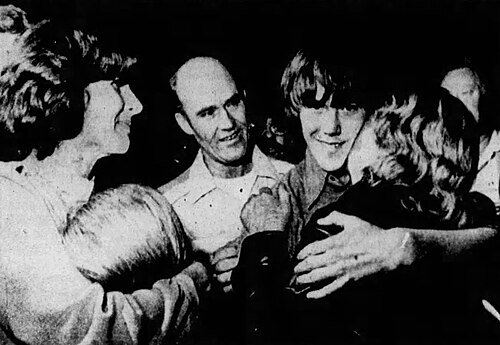
The investigation quickly turned toward Parnell. Police discovered his previous criminal history, including a 1951 sodomy conviction. Steven and Timothy were reunited with their families that same day.
Parnell was eventually convicted in separate trials for kidnapping Steven and Timothy. He received a seven-year sentence and ultimately served five years before being paroled.
## Coming Home Was Not the End
Steven had spent more than half of his childhood living under completely abnormal circumstances. Returning to his family did not instantly make everything normal again.
He had grown accustomed to a life in which he could smoke, drink and move around with little structure. Back with his parents, he had to adjust to rules and expectations that belonged to a family environment he had missed for years.
There was another difficult problem: his family remembered him as the seven-year-old boy who had disappeared. Steven, however, returned as a teenager with years of experiences that they could not fully understand.
He struggled at school and was bullied because of the abuse he had suffered. He eventually dropped out and began drinking heavily. His relationship with his father also became strained.
## Building a Life of His Own
Despite the difficulties, Steven eventually created a family of his own.
In 1985, he married Jody Edmondson, who was 17 at the time. They later had two children, Ashley and Steven Jr.
Steven also became involved with organizations concerned with child abduction. He spoke with children about personal safety and continued to tell his story publicly, using his experience to warn others about the dangers children can face.
Before his death, he was living in Merced and working at a pizza shop. He had also joined the Church of Jesus Christ of Latter-day Saints.
## Steven’s Death
Steven’s life ended unexpectedly on September 16, 1989.
While he was riding his motorcycle home from work, a car turned in front of him. The resulting hit-and-run crash caused fatal head injuries.
Witnesses eventually helped identify the driver, Antonio Loera. Loera received a three-month prison sentence for the hit-and-run but was acquitted of manslaughter.
Around 500 people attended Steven’s funeral. Timothy White, the little boy Steven had helped escape nearly a decade earlier, served as one of the pallbearers.
## The Story Continued After Steven’s Death
Steven’s experience later became the basis for television and literary adaptations.
In 1989, NBC broadcast a two-part miniseries titled *I Know My First Name Is Steven*. Steven himself served as an adviser to the production and even appeared briefly in the program. The miniseries received four Emmy Award nominations.
His story was also covered in books and later became part of the 2022 Hulu docuseries *Captive Audience: A Real American Horror Story*, which examined Steven’s kidnapping and its long-term impact on his family.
## Kenneth Parnell’s Later Years
Parnell’s criminal history did not end with Steven’s kidnapping.
In 2004, more than two decades after Steven’s escape, Parnell was convicted after attempting to persuade his caretaker’s sister to obtain a young boy for him in exchange for money.
Timothy White, now an adult, was subpoenaed to testify in that case. Because Steven had died years earlier, testimony from his earlier trial was read to the jury.
Parnell eventually died of natural causes on January 21, 2008, while serving a sentence of 25 years to life at the California Medical Facility in Vacaville.
## Timothy White’s Life
Timothy White survived his childhood ordeal and went on to become a deputy with the Los Angeles County Sheriff’s Department.
He died on April 1, 2010, at the age of 35, from a pulmonary embolism.
Several months later, a statue honoring Steven and Timothy was dedicated in Applegate Park in Merced. The monument was intended not only to remember the two boys but also to offer hope to families whose children have disappeared.
## A Story of Survival
Steven Stayner’s story is ultimately remembered not only because of the years he lost, but because of what he did when he finally had an opportunity to act.
At 14, after spending most of his childhood under Kenneth Parnell’s control, Steven could have tried to escape alone. Instead, he took Timothy White with him. His decision brought both boys to safety and exposed the man responsible for their abductions.
Steven’s later life was marked by struggles that reflected the enormous impact of his childhood trauma, but he also became a husband, father and advocate for children’s safety.
His story remains a reminder that surviving captivity is only one part of escaping it. For Steven, finding his way home was the beginning of another difficult journey: learning how to live after childhood had been taken away from him.
This story is based on publicly available information and reported facts. It has been independently written and presented for informational purposes. Images, if any, belong to their respective owners.