
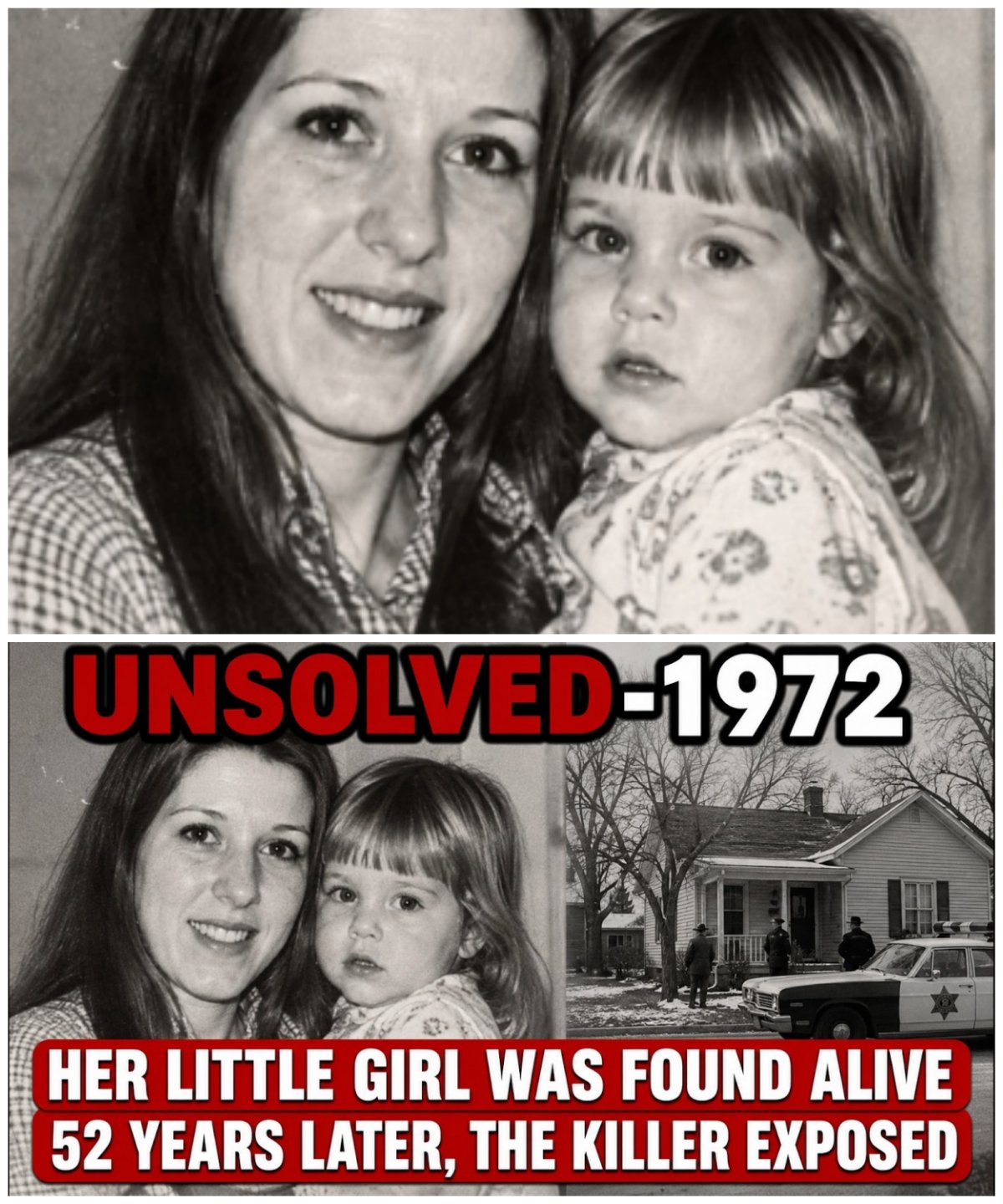
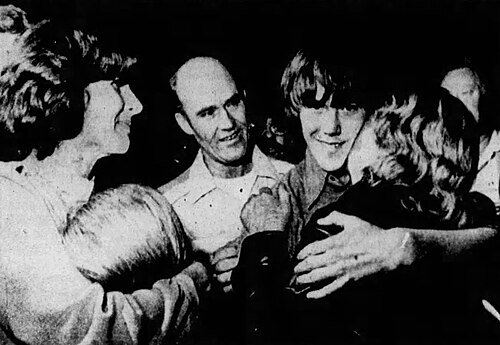






On a January morning in 1972, Carol Anne Weston disappeared from her home in Hendricks County, Indiana.
What made the disappearance especially troubling was what she left behind.
Her front door was unlocked. A pot of oatmeal had recently been on the stove. Her young daughter, Lynette, was still inside the house, dressed in her pajamas and holding a wooden spoon.
Carol Anne was nowhere to be found.
At the time, investigators did not believe there was enough evidence to indicate that a crime had occurred. The possibility that she had voluntarily left was given considerable weight, particularly because of difficulties in her personal life.
Her family never accepted that explanation.
## A Mother Who Would Not Stop Looking
Carol Anne’s mother, Edna Weston, was convinced that her daughter would never knowingly leave her little girl behind.
For Edna, the circumstances inside the house mattered.
Carol Anne’s coat remained behind. So did her purse. Her car was still at the residence. Her daughter was alone inside.
Those details did not fit the idea of a woman simply deciding to walk away from her life.
A missing-person report was filed, but the investigation soon slowed. According to the supplied account, within several weeks there was little active investigative progress, and within months the case had effectively become cold.
Edna, however, continued searching for answers.
She raised Lynette and kept records of the people, questions and details she believed deserved another look.
## The Daughter Who Grew Up With Questions
Lynette was only a toddler when her mother disappeared.
She grew up knowing that something had happened to Carol Anne, but she had no memories of the morning itself.
Her grandmother tried to answer her questions as honestly as possible.
The answer was often the same: they did not know what had happened.
As the years passed, Lynette built a life of her own, but her mother’s disappearance remained an unanswered part of it.
Meanwhile, Edna continued maintaining her own collection of notes, newspaper clippings and other material connected to the case.
## A Second Look at the Old Case
Years after Carol Anne vanished, Detective Harold Voss reportedly reviewed the case while examining unresolved missing-person investigations.
The original investigation immediately raised questions for him.
Rather than simply accepting the conclusion that Carol Anne had left voluntarily, Voss looked again at the physical circumstances surrounding her disappearance.
The coat.
The purse.
The vehicle.
The food left behind.
He also revisited people who had been part of Carol Anne’s life.
One name received particular attention: Dale Puit.
Puit had known Carol Anne before she disappeared and had been questioned during the original investigation. According to the supplied account, the earlier interview had not produced anything investigators considered significant.
Voss interviewed him again years later, but still did not obtain enough information to move the case forward.
The case remained unresolved.
## Edna Passes the Investigation to Lynette
By the 1990s, Edna’s health was declining.
She eventually gave Lynette the collection she had built over decades: the case material, newspaper clippings, correspondence and the handwritten list of people and questions she believed were important.
Lynette understood what her grandmother was giving her.
It was more than a box of papers.
It was the investigation Edna had refused to abandon.
Lynette continued contacting authorities and trying to keep her mother’s disappearance from being forgotten.
## The Possibility of Genetic Genealogy
The case took another turn decades later when advances in genetic genealogy began changing the way investigators approached old cases.
After seeing how the technology had been used in other investigations, Lynette reportedly contacted authorities to ask whether biological evidence connected to her mother’s disappearance might still exist.
The answer was uncertain at first.
The case was nearly half a century old, and evidence-handling practices in the early 1970s were very different from those used today.
According to the supplied account, investigators eventually located preserved material associated with the original investigation.
That evidence had never previously been subjected to modern genetic testing.
## A Name From the Past
Testing reportedly produced a partial genetic profile that investigators believed could be useful.
The profile was subsequently examined through genetic genealogy.
Weeks later, investigators reportedly received a result that pointed toward a familiar name.
Dale Puit.
The same man whose name had appeared in the original investigation decades earlier.
Investigators compared the new information with the old case file and sought legal authorization to proceed.
According to the supplied account, forensic testing ultimately linked biological evidence from the original scene to Puit.
## An Arrest Nearly Five Decades Later
In the account provided, Dale Puit was arrested in April 2021.
He was then in his seventies and had spent decades living an apparently ordinary life.
The arrest transformed a case that had once been considered inactive into a major cold-case investigation.
For investigators, the significance was not simply that a suspect had finally been identified.
It was that the name had appeared in the case from the beginning.
The original investigators had questioned him.
Decades later, new forensic technology allegedly brought investigators back to that same person.
Puit was charged with first-degree murder and pleaded not guilty, according to the supplied account.
## The Case Ends Without a Trial
The case never reached a full courtroom conclusion.
According to the supplied material, Puit died in custody in early 2023 before a verdict could be reached.
With his death, the criminal prosecution ended, although the investigative findings remained part of the case record.
For Lynette, however, the most important change had already happened.
After decades of uncertainty, she finally had an explanation for the question that had followed her since childhood.
## The Question That Would Not Disappear
Lynette was only two years old when her mother vanished.
She had no personal memory of the morning.
Instead, she inherited the story through her grandmother—the photographs, the documents, the unanswered letters and the determination to keep looking.
Edna never accepted the conclusion that Carol Anne had simply walked away.
She kept searching until she could no longer do it herself.
Then she passed that responsibility to Lynette.
Nearly half a century later, the case reportedly produced the answer they had both spent their lives seeking.
The story is therefore about more than a cold case.
It is about the persistence of a family that refused to let an unexplained disappearance become forgotten history.
Carol Anne disappeared in 1972.
Her daughter grew up without her.
Her mother spent decades demanding answers.
And the evidence that had remained silent for years eventually became the key to reopening the mystery.
For the people who loved Carol Anne, the most important question was never simply where she had gone.
It was what had happened to her.
And after decades of waiting, they finally had an answer to that question.
This story is based on publicly available information and reported facts. It has been independently written and presented for informational purposes. Images, if any, belong to their respective owners.