






A Politician Caught in a Growing Crisis
In October 1970, Quebec was already facing a political crisis unlike anything the province had experienced before.
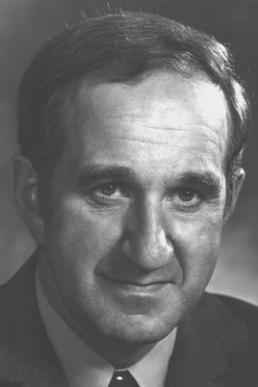
Pierre Laporte was a lawyer, journalist, and prominent Quebec politician. By that time, he had become Deputy Premier, Minister of Labour and Manpower, and Minister of Immigration under Premier Robert Bourassa.
But Laporte’s career had begun long before he entered government.
As a journalist for Le Devoir, he had spent years investigating the government of Maurice Duplessis and reporting on allegations of political corruption. His work made him a recognizable and sometimes controversial figure in Quebec politics.
By 1970, however, the province was facing a far more dangerous confrontation.
The Front de libération du Québec, better known as the FLQ, had begun carrying out bombings and other militant activities in support of Quebec independence. On October 5, the group kidnapped British trade commissioner James Cross.
Five days later, Laporte would become their next target.
Taken From His Own Front Yard
On October 10, 1970, Pierre Laporte was at his home in Saint-Lambert, Quebec, spending time outside with his nephew.
Then a vehicle stopped near the house.
Several armed men approached.
Laporte was forced into the vehicle at gunpoint and taken away.
The kidnapping was carried out by the FLQ’s Chénier cell, whose members included Paul Rose, Jacques Rose, Francis Simard, and Bernard Lortie.
Unlike Cross, who was a foreign diplomat, Laporte was a senior Quebec government official. His abduction immediately intensified the crisis.
The kidnappers demanded the release of 23 people they described as political prisoners.
They also wanted Laporte to produce a written confession concerning alleged connections between him and the Cotroni crime family. The FLQ hoped such a document would expose what they considered corruption within Quebec’s political system.
Laporte was taken to a house in Longueuil and held prisoner.
Meanwhile, the Canadian government responded with extraordinary measures.
Prime Minister Pierre Trudeau invoked the War Measures Act, allowing authorities to conduct widespread searches and arrests as they tried to locate the kidnappers and their hostages.
For Laporte, however, the most important question was much simpler:
Would he ever make it home?
A Desperate Attempt to Escape
Laporte spent the next several days imprisoned, blindfolded and restrained.
Then, on October 16, he heard a police siren.
Believing that help might finally be close, he made a desperate attempt to escape.
Laporte managed to reach a window and threw himself through it. But his leg restraints prevented him from getting away.
The attempt left him seriously injured.
His captors pulled him back inside.
He was bleeding heavily, and according to later accounts, his condition deteriorated rapidly. By this point, the situation had become a question of life and death.
But instead of taking Laporte to a hospital, his captors kept him inside the house.
During the night, he became increasingly weak.
The next morning, October 17, the men holding him made the decision that would end his life.
Laporte was strangled using the chain attached to his restraints.
He was 49 years old.
The Body in the Trunk
The same day, authorities made a discovery that confirmed the worst.
Pierre Laporte’s body was found inside the trunk of a car at the Montreal Saint-Hubert Longueuil Airport.
He had been missing for exactly one week.
The kidnapping had become a murder.
The members of the Chénier cell were eventually arrested in December 1970 at a farmhouse south of Montreal. They were prosecuted and received prison sentences ranging from lengthy terms to life imprisonment, although all were eventually released on parole.
In the years that followed, questions remained about exactly what had happened inside the house where Laporte was held.
Francis Simard later wrote a statement accepting responsibility for the killing along with the Rose brothers. In 1982, the four members of the Chénier cell collectively stated that they accepted responsibility for Laporte’s death, while declining to identify exactly who had carried out the strangulation.
A 1980 inquiry by Justice Duchaine concluded that Jacques Rose and Francis Simard were present when Laporte was killed, although it did not identify the person who actually strangled him.
A Murder Surrounded by Controversy
Laporte’s death became one of the defining events of the October Crisis.
Over the years, alternative explanations were also proposed.
A 1977 book by Quebec separatist journalist Pierre Vallières argued that the Canadian Army, the RCMP, and the Cotroni crime family had secretly conspired to have Laporte killed and then blame the murder on the FLQ.
That theory was later rejected by members of the Chénier cell themselves. In their own 1982 account, they maintained that they were collectively responsible for Laporte’s murder.
Another interpretation emerged decades later. In a 2010 documentary, journalist Guy Gendron argued that Laporte’s death had not been deliberately planned and that he had been killed during a moment of panic.
That interpretation has been disputed, and the circumstances surrounding the final moments of Laporte’s life have continued to generate debate.
What is not disputed is what happened in October 1970: Pierre Laporte was kidnapped by the FLQ, held hostage for seven days, and ultimately killed.
Remembering Pierre Laporte
Pierre Laporte was buried on October 20, 1970, following a funeral attended by prominent political figures from Quebec and Ottawa.
His murder became inseparable from the memory of the October Crisis, a period that profoundly affected Quebec and Canadian history.
Forty years after his death, a monument honoring Laporte was unveiled near his former home in Saint-Lambert.
The inscription carries a simple message:
“No one lives for oneself. No one dies for oneself.”
For Laporte’s family, his death was not simply a chapter in political history.
It was the loss of a husband, a father, and a man whose life ended after he was taken from his own front yard.
And the events of those seven October days in 1970 remain one of the darkest episodes in Quebec’s history.
This story is based on publicly available information and reported facts. It has been independently written and presented for informational purposes. Images, if any, belong to their respective owners.