


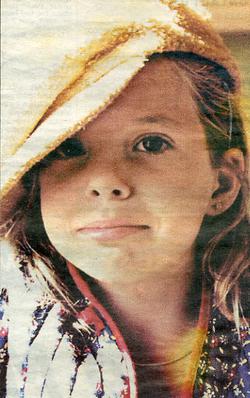

For 39 years, one question followed the Martinko family through every Christmas season:
Who killed Michelle?
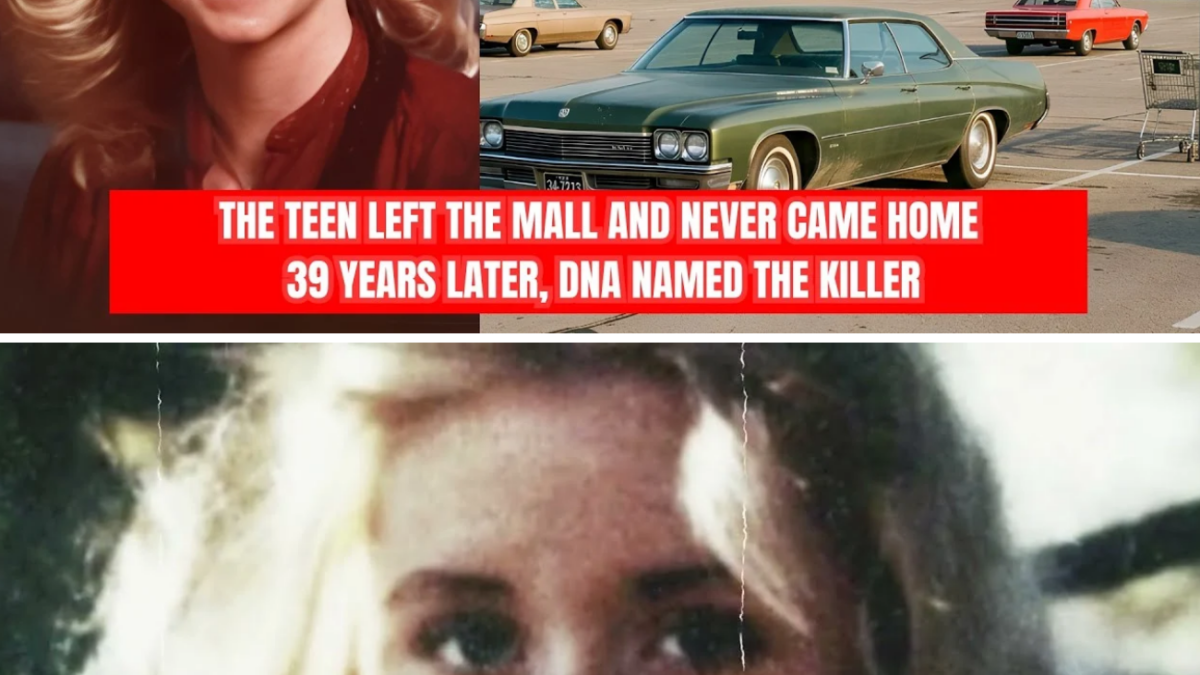
On December 19, 1979, 18-year-old Michelle Martinko left a school choir banquet in Cedar Rapids, Iowa, and drove her family’s 1972 Buick to Westdale Mall. She intended to shop for a winter coat.
She never made it home.
Nearly four decades later, investigators would use a combination of preserved biological evidence, modern DNA analysis, genetic genealogy, and an ordinary drinking straw to identify the man convicted of killing her.
But the story is more complicated than simply saying that DNA solved a 39-year-old murder.
Because the DNA existed almost from the beginning.
The problem was that for decades, investigators had no way to turn that biological evidence into a name.
And when the name finally emerged, it belonged to a man who had never been one of the original suspects.
This is the story of Michelle Marie Martinko.
December 19, 1979
Cedar Rapids was a growing Midwestern city surrounded by the farmland of eastern Iowa.
Michelle Martinko was 18 years old and a senior at John F. Kennedy High School.
Friends remembered her as outgoing and talented. She participated in school activities, sang in the choir, and had plans for life after graduation. She was considering studying interior design.
On the evening of December 19, Michelle attended a choir banquet at the Sheraton Hotel.
Afterward, she got into her family’s Buick Electra and drove to Westdale Mall.
The mall had opened only recently, and Michelle had a simple reason for being there: she wanted to pick up a winter coat.
According to the later investigation, she spoke with friends at the mall that evening.
At some point between approximately 9 and 10 p.m., Michelle left the mall and walked back toward her car.
That was the last confirmed time anyone who knew her saw her alive.
Her parents expected her home.
But the hours passed.
By approximately 2 a.m., Michelle’s parents reported her missing.
A little after 4 a.m., police were dispatched to Westdale Mall.
They found the Buick in the northeast section of the parking lot.
Inside was Michelle.
She had been murdered.
A Brutal Attack
The evidence showed that Michelle had fought for her life.
The autopsy documented 29 sharp-edge wounds, including injuries to her hands consistent with defensive wounds.
The medical examiner concluded that she had suffered a violent struggle and sustained a fatal wound that penetrated a major blood vessel.
Investigators also believed the attacker may have been injured during the assault.
And that detail would become enormously important decades later.
Because somewhere in that struggle, the attacker appears to have left his own biological evidence behind.
Investigators recovered blood from the Buick, including material associated with the gearshift, and later testing identified male DNA on Michelle’s dress.
At the time, however, none of that could identify a particular person.
In 1979, forensic DNA profiling as we know it today was not available to investigators.
The evidence could be preserved.
But preservation is not the same thing as identification.
For years, the killer remained anonymous.
The Investigation
Police investigated people who might have known Michelle and developed a large list of potential suspects.
One person who attracted attention was an ex-boyfriend because of behavior that investigators considered unusual.
But suspicion was not proof.
And investigators never found evidence sufficient to charge him.
Over the years, authorities examined more than a hundred potential individuals in connection with the investigation, using DNA testing and other investigative methods to eliminate people.
One by one, possible suspects disappeared from the list.
But the person responsible remained unidentified.
By the 1980s, the case had become a cold case.
There was still evidence.
There was still an unanswered murder.
What investigators lacked was a path from the evidence to the killer.
When DNA Changed the Case
The investigation began moving again as DNA technology improved.
Testing in the early 2000s established Michelle’s DNA profile and helped investigators analyze biological material that had been collected decades earlier.
In 2005, Iowa’s Division of Criminal Investigation laboratory obtained a partial male DNA profile from a bloodstain on Michelle’s dress.
Investigators designated the crucial stain as F5.
The profile was extraordinarily useful for excluding people.
The laboratory estimated that fewer than one in 100 billion unrelated individuals would be expected to share that profile.
But there was still one enormous problem.
The DNA belonged to someone whose identity investigators did not know.
So they submitted the profile to CODIS, the national law-enforcement DNA database.
And waited.
CODIS is extremely useful when the person who left crime-scene DNA is already represented in the database.
But a database cannot produce a name that isn’t in it.
And Michelle’s killer did not appear to have a qualifying DNA profile in CODIS.
The searches produced no match.
The Case Gets Another Chance
In 2017, Cedar Rapids investigators turned to Parabon NanoLabs.
Parabon used the available DNA to create forensic phenotype predictions—attempts to estimate physical characteristics from genetic information.
The resulting images gave investigators a new way to think about the unknown man.
But the images alone did not identify him.
The real breakthrough came from a different use of the DNA.
Genetic genealogy.
Instead of asking:
“Is this person’s DNA already in a criminal database?”
investigators could ask:
“Does this person’s DNA resemble the DNA of people who voluntarily uploaded their own genetic information for genealogy?”
That is a completely different question.
And it opened a door that CODIS could not.
GEDmatch
Investigators provided the DNA profile to Parabon for genetic-genealogy analysis.
Parabon searched GEDmatch, a public genealogy database containing DNA profiles uploaded by individuals interested in tracing family relationships and ancestry.
In 2018, the analysis produced a distant relative.
That person was not the killer.
But the relative was a clue.
And that clue could be turned into a family tree.
Detective Matt Denlinger and other investigators began working backward through genealogical records.
They examined family relationships and historical records, gradually reconstructing branches of a family that could contain the unknown DNA contributor.
It was painstaking work.
There was no computer screen that simply flashed:
“Jerry Burns.”
Instead, investigators had to move from distant relatives, to ancestors, to descendants, eliminating people who could not fit the evidence.
Eventually, the investigation pointed toward a family in Iowa.
And three brothers emerged as people investigators needed to examine.
Their names were:
Donald Burns.
Kenneth Burns.
Jerry Lynn Burns.
Three Brothers
The three brothers had grown up in Manchester, Iowa.
Jerry Burns had been 25 years old when Michelle was murdered.
But his name had not emerged during the original investigation as one of the major suspects.
By 2018, he was 64.
He had spent decades living a life that appeared entirely separate from the 1979 murder.
He had a family.
He owned a business.
People in Manchester knew him.
And there was nothing about his public life that had made him an obvious answer to a 39-year-old murder.
Investigators now had to determine whether the genealogy was actually pointing to the right family.
So they began eliminating the brothers.
They collected discarded DNA from Kenneth and Donald.
Both were excluded.
That left Jerry.
The Straw
Investigators watched Jerry Burns.
Eventually, they followed him to a Pizza Ranch restaurant in Manchester.
Burns drank from a plastic straw.
When he finished eating, he left the straw behind.
Police recovered it and sent it for DNA analysis.
And this is where one important distinction matters.
The straw did not immediately produce the final courtroom DNA match.
The laboratory obtained a weak male profile and concluded that the DNA donor could not be excluded as the major contributor to the profile from stain F5 on Michelle’s dress.
That result was significant enough for investigators to take the next legal step.
They obtained a search warrant for a direct DNA sample from Burns.
A buccal swab was collected.
That sample was then compared with the crime-scene DNA.
The result was extraordinarily strong.
The probability of finding the same profile in an unrelated randomly selected person was calculated at less than one in 100 billion.
Additional testing also connected Burns to the DNA profile recovered from the Buick’s gearshift.
The decades-old evidence had finally acquired a name.
December 19, 2018
Investigators interviewed Burns at his business in Manchester on December 19, 2018.
It was a deliberate date.
Thirty-nine years earlier, on December 19, 1979, Michelle had driven to Westdale Mall and never returned home.
Now, on the anniversary of her murder, investigators confronted Burns with the evidence.
He denied killing Michelle.
He said he did not know her.
He could not explain why his DNA was connected to biological evidence recovered from the scene.
Police arrested him that day.
Jerry Lynn Burns, then 64 years old, was charged with first-degree murder.
After nearly four decades, Michelle’s family finally knew the name investigators believed belonged to her killer.
A Community in Shock
The arrest stunned people who knew Burns.
He had not been living as a fugitive.
He had built a life in Manchester.
People who had known him for decades described their disbelief at the accusation.
That reaction is one of the most striking parts of the case.
For almost 40 years, Michelle’s killer had existed in the public imagination as an unknown man—a composite sketch, a stranger, a shadow from a dark parking lot.
Then investigators attached a real name and a real face to that shadow.
And people who knew that face struggled to reconcile the man they knew with the evidence presented by investigators.
The Trial
Jerry Burns’ trial began in February 2020.
The prosecution’s case centered heavily on the DNA evidence.
The defense challenged the reliability and interpretation of the evidence and argued that the passage of decades raised questions about the handling and preservation of biological material.
But the jury heard evidence connecting Burns to multiple samples.
The direct DNA comparison from Burns was consistent with the profile from the bloodstain on Michelle’s dress at a statistical level of less than one chance in 100 billion among unrelated people.
Testing also connected Burns to the DNA profile recovered from the gearshift.
Investigators additionally testified about scars observed on Burns’s hands and arms, which prosecutors argued could be consistent with injuries sustained during the struggle.
The defense maintained that the evidence did not establish Burns as the murderer beyond a reasonable doubt.
The jury disagreed.
On February 24, 2020, after approximately three hours of deliberation, the jury found Jerry Lynn Burns guilty of first-degree murder.
Life Without Parole
On August 7, 2020, Burns was sentenced to life in prison without the possibility of parole.
For Michelle’s family, the verdict answered the most basic question that had haunted them since 1979:
Who killed Michelle?
But it did not answer everything.
There was still another question.
Why?
Why did a 25-year-old man attack an 18-year-old woman sitting in her car?
Why Michelle?
What happened during those final moments?
And what caused the attack to begin?
The conviction established who the jury believed was responsible.
It did not provide a satisfying explanation for the motive.
The Appeal
The story did not end with the conviction.
Burns challenged the use of DNA obtained from the discarded Pizza Ranch straw.
His argument centered on the Fourth Amendment and the question of whether police needed a warrant before collecting and analyzing DNA from something he had left behind in a public place.
The case eventually reached the Iowa Supreme Court.
On March 31, 2023, the court affirmed Burns’s conviction.
The majority concluded that, under the circumstances of this case, the collection and analysis of DNA from the discarded straw did not violate Burns’s constitutional rights.
The court also addressed the distinction between the discarded object and the genetic information obtained from it, making clear that its ruling was tied to the particular DNA analysis performed in Burns’s case.
The conviction and life sentence remained in place.
The Evidence Michelle Left Behind
There is an important lesson in the Martinko case that has nothing to do with sophisticated genealogy databases.
It begins with the evidence collected in 1979.
Michelle fought back.
During that struggle, biological evidence associated with her attacker was left behind.
At the time, investigators could not turn that evidence into a name.
But they preserved it.
Decades later, technology caught up with the evidence.
First came improved DNA profiling.
Then CODIS provided a way to search for known offenders.
When CODIS produced no answer, genetic genealogy provided another route.
Instead of searching directly for the perpetrator, investigators searched for his relatives.
The family tree became the bridge between an unidentified DNA profile and an actual person.
And finally, a discarded drinking straw supplied the comparison investigators needed to move from a genealogical lead to a specific suspect.
That sequence is what makes this case so significant.
It wasn’t one technological miracle.
It was several generations of forensic technology building on evidence that had survived since 1979.
What Genetic Genealogy Actually Did
It is also important to understand what genetic genealogy did—and did not do.
GEDmatch did not simply identify Jerry Burns by name.
It provided genetic relationships to people whose DNA was already in the database.
Investigators then used genealogy research to reconstruct family connections.
That process eventually pointed toward the Burns family.
Only after investigators obtained and tested DNA from the individual brothers could they determine which brother was consistent with the crime-scene profile.
That distinction matters.
Genetic genealogy is not the same thing as a conventional criminal DNA database.
CODIS primarily looks for direct matches between crime-scene profiles and profiles already contained in law-enforcement databases.
Genetic genealogy can instead use relatives to build a path toward someone whose own DNA is not in CODIS.
That was the breakthrough in Michelle’s case.
Four Decades of December
For Michelle’s sister, Janelle Stonebraker, the passage of time did not erase what happened.
Christmas continued to arrive every year.
The decorations changed.
People grew older.
Children became adults.
The world moved forward.
But December still carried the memory of 1979.
The family had spent decades without knowing who had taken Michelle from them.
After the conviction, they finally had an answer to that part of the story.
Not every answer.
Not an explanation for the motive.
But a name.
And after 39 years, a name was something the family had not had.
The Legacy of the Martinko Case
The murder of Michelle Martinko is now remembered as an important example of what can happen when old evidence survives long enough for technology to catch up with it.
In 1979, investigators collected biological evidence without knowing that it might one day identify the person who left it behind.
In the 2000s, advances in DNA analysis transformed that evidence into a usable genetic profile.
CODIS failed to produce a match.
Then genetic genealogy created a different investigative pathway.
A distant relative became a family tree.
The family tree became three brothers.
Two were eliminated.
The third was tested.
And the DNA pointed back to evidence that had been sitting in the case for decades.
The murder had happened in a matter of minutes.
The investigation took 39 years.
The Final Question
Michelle was 18 when she died.
She should have been preparing for graduation.
She should have been deciding where to go to college and what kind of life she wanted.
Instead, her future ended inside a Buick in a shopping-mall parking lot.
For decades, her family had no name for the person responsible.
Now they do.
Jerry Lynn Burns was convicted of first-degree murder and sentenced to life without parole, and Iowa’s highest court later upheld that conviction.
But perhaps the most remarkable part of the story is that the evidence never stopped speaking.
It simply took decades before investigators learned how to listen to it.
Michelle’s final struggle left behind something that the killer could not take away.
A biological trace.
A tiny piece of evidence that survived the years.
And eventually, that evidence led investigators across a family tree, across generations of records, and finally to the man a jury determined was responsible for her death.
Thirty-nine years after Michelle went to Westdale Mall and failed to come home, the question that had followed her family for nearly four decades finally had an answer.
Her killer had a name.
And the evidence that identified him had been waiting since 1979.
If you want more carefully researched cold-case stories like this one, subscribe and follow along. There are still cases around the country where evidence collected decades ago is waiting for technology—and investigators—to give it a voice.
This story is based on publicly available information and reported facts. It has been independently written and presented for informational purposes. Images, if any, belong to their respective owners.