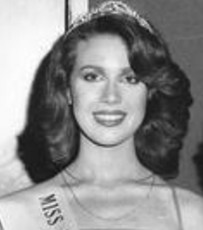

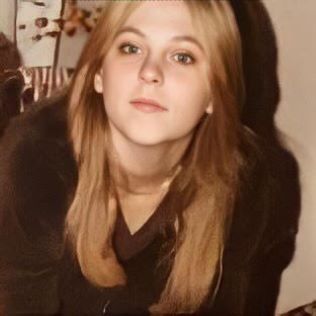
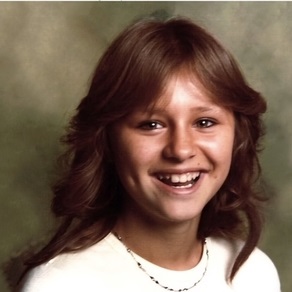
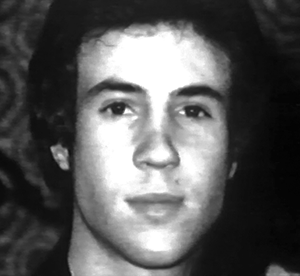
Cynthia Elizabeth James (née Hack; June 12, 1944 – c. June 2—June 8, 1989)[a] was a Canadian nurse who disappeared from Richmond, British Columbia, on May 25, 1989. She was found deceased approximately two weeks later in the yard of an abandoned house, hogtied and with a nylon stocking wrapped around her throat. An autopsy indicated that she had died of an overdose of morphine, diazepam, and flurazepam. James’s death was notable as she had made numerous reports to authorities dating back to 1982, alleging that she had been a victim of various acts of stalking, harassment, vandalism, home invasions, and physical attacks perpetrated by an unknown assailant.
James’s death and prior allegations were subject of great dispute, as the Royal Canadian Mounted Police (RCMP) were unable to find any evidence suggesting she had been an actual victim of a stalker. Furthermore, she had a documented medical history of depression and suicidal thoughts, leading authorities to suspect that she may have been fabricating the various attacks and other incidents herself, orchestrating them to appear as legitimate, culminating in an eventual staged suicide.[2] Over the nearly seven-year period James reported the incidents, the RCMP allocated an estimated $1–1.5 million in funds to investigate her claims, marking one of the longest and most costly police investigations in British Columbia history.[3]
Despite skepticism from authorities, James’s family members publicly insisted that she had in fact been preyed upon, and eventually murdered. A coroner’s inquest was held in the spring of 1990 which included testimony from more than 80 witnesses. The inquest ultimately resulted in the conclusion that James had died of an “unknown event.”[b]
James’s death received international media coverage and was the subject of an Unsolved Mysteries segment in 1991. Furthermore, two different books were published in 1991 chronicling her life and death: Who Killed Cindy James by British journalist Ian Mulgrew, and The Deaths of Cindy James by Neal Hall, a Canadian crime reporter who had extensively covered James’s case for the Vancouver Sun. In 2021, a podcast on James, Death by Unknown Event, narrated by Pamela Adlon, was released by Audible.
Background
Cynthia Elizabeth Hack was born in Oliver, British Columbia, Canada, on June 12, 1944, to Matilda “Tilley”, a homemaker, and Otto Hack, an English teacher and former colonel in the Royal Canadian Air Force.[3][5] Both of her parents were of Russian descent.[6] She was one of six children, with three older brothers and two younger sisters.[3] Cindy spent part of her teenage years in Ottawa due to her father’s involvement in the air force, and attended high school there.[7] She recorded in her private diaries that her childhood had been marked by her father’s strictness, which included corporal punishment.[8]
In adulthood, Cindy pursued a nursing career in Vancouver,[9] and enrolled in nursing school in 1962.[10] During this period, her father had reenlisted with the air force and relocated the family to France, where she visited them during holidays.[11] During this time, in letters to her family, Cindy occasionally referred to an unnamed intern she had met during her studies.[12] She claimed that the two had at one point been engaged, and that, after finding he had terminal cancer, the man died by suicide while the couple were on a skiing trip.[12] None of her parents or siblings, however, ever met the man, and Cindy did not name him.[13]
In the summer of 1965, Cindy met Roy Makepeace, a South African psychiatrist 18 years her senior.[14][15] The two married on December 9, 1966, the same year she graduated from nursing school with a BSN.[16] Cindy’s parents were skeptical of the marriage due to the couple’s age difference, and her father felt that Makepeace had taken advantage of Cindy’s “naiveté and gullibility.”[17] Her family testified that the couple’s marriage was troubled and that the two were at times emotionally distant.[18] Though Cindy later made accusations of spousal abuse, Makepeace asserted he “only slapped her twice” over the course of their marriage.[19] Though licensed as a psychiatrist in his home country of South Africa, Makepeace failed twice to obtain his medical license in Canada and instead accepted a job as an Assistant Professor in the Faculty of Medicine at the University of British Columbia.[20]
Cindy worked as a pediatric nurse at Vancouver General Hospital—where her husband had also one time been employed—from 1966 to 1975.[3] In 1973, Makepeace took a job as director of health services at BC Hydro.[21] In April 1975, Cindy was hired as a team coordinater at Vancouver’s Blenheim House, a facility caring for children with behavioral disorders.[3][22] She worked at Blenheim House for approximately 12 years, and was noted by her colleagues for her competence and professionalism.[3][23]
Disappearance
At approximately 4 p.m. on May 25, 1989, Cindy picked up her paycheck from Richmond General Hospital.[90] There, she spoke with a coworker, who reported that she seemed to be in good spirits, and said Cindy informed her she had not experienced any suspicious activity at her home for at least two weeks.[90] Cindy was last seen several hours later purchasing groceries at a Safeway supermarket and visiting a Bank of Montreal at the Blundell Shopping Centre.[90][91][92] A bank patron told police they had stood in line behind Cindy at the bank’s ATM, where she deposited her paycheck at approximately 7:59 p.m.[93]
That same day, Cindy had scheduled to have an infrared detection system installed in her home for security purposes,[7] and had planned for her friends Agnes and Tom Woodcock to play bridge and spend the night.[90] After not hearing from Cindy, the Woodcocks visited her home at approximately 10:00 p.m., and found the house locked and Cindy’s Chevrolet Citation absent.[90] They briefly spoke with Johnston, who informed them she had mentioned earlier that she was going to do some shopping.[7] The Woodcocks drove past the Blundell Shopping Centre which they knew Cindy to frequent and found her car abandoned in the lot.[90] They proceeded to drive to the Richmond RCMP station to report Cindy as a missing person.[90] Though she had only been missing for several hours, a patrol car was sent to investigate based on her extensive history with the police department.[90]
Upon examination of the vehicle, blood was located inside the car on the driver’s side door as well as groceries and a wrapped birthday gift for her friend’s young son; contents from Cindy’s wallet were found lying underneath the vehicle.[94][76] A subsequent inspection of her home that night showed nothing had been disturbed: police observed that the house was orderly and clean, and filled with numerous “well-tended” houseplants.[76] The Canadian Coast Guard deployed searches of rivers in the area, as well as the Gulf of Georgia, in an attempt to locate the missing woman.[95]
Several days after Cindy was reported missing, her tenant, Johnston informed police he had received a call at his office from a man claiming to be her father, inquiring about her life insurance policy.[92] Johnston’s secretary informed the caller that he would need to visit the office, as private insurance matters could not be relayed over the phone.[92] When authorities questioned Cindy’s father, he denied ever making the phone call.[92]
Death
On June 8, 1989, Gordon Starchuck, a municipal paving worker, discovered Cindy’s body in the backyard of an abandoned house at 8111 Blundell Road, Richmond.[9][96][97] Her body was hogtied with rope behind her back, and a black nylon stocking was bound tightly around her neck.[94] Cindy’s right leg lay beneath a bramble of blackberry bushes, and her coat was found lying near her body.[1] The property where her remains were found was situated along a busy street near an intersection, which had frequent foot traffic from pedestrians.[1] On the residence’s exterior fuel tank, police found a graffito in orange spray paint reading: “Some bitch died here.”[76] A line, spray-painted along the ground with the same orange paint, ran from the fuel tank to the spot where her body lay, encircling it.[92] Inside the abandoned home, another spray-painted graffito reading “Devil” was found.[63]
Sheila Carlyle, a pathologist who examined Cindy’s body at the scene, noted that her hands had been bound so tightly that one finger had scratched another down to the bone.[98] A pinprick consistent with a hypodermic needle was located on the inner-right elbow of the body.[99] Based on insect and larvae activity on the remains, forensic entomologist Gail Anderson concluded that the body had begun the decomposition process at the site where it was found as early as June 2, 1989.[1]
An autopsy determined that Cindy had died of multiple drug intoxication from substantial amounts of morphine, diazepam, and flurazepam.[94][76] Her blood toxicology report showed that she had ten times the lethal dose of morphine in her bloodstream.[63] Based on an examination of her stomach contents, toxicologist Heather Dinn reported that Cindy had orally ingested approximately twenty 30-milligram tablets of flurazepam (or up to eighty tablets of a lower dose),[1] in addition to numerous tablets of diazepam, a combination that itself was lethal.[100] The method by which the morphine had been administered could not be determined, “baffling” the pharmacologist who analyzed the toxicology report.[101] Traces of morphine were found in Cindy’s stomach, though Dr. John McNeill stated that the amount could have resulted from intravenous injection of the drug.[102] By McNeill’s analysis, if Cindy had received the morphine via intravenous injection, she would have been rendered unconscious within mere minutes, and would have died within several hours.[102] It was ultimately concluded by authorities that the overdose had been “so large that there was no reliable estimate of how long Cindy could have remained functional.”[103]
The RCMP suspected Cindy’s cause of death was likely a suicide or accident, based on the assumption that she had fabricated her numerous prior claims of assaults and stalking,[90][104] and this was quickly reported by several local tabloid news outlets.[105] Her personal private investigator, Kaban, visited the morgue to examine her body on June 10 and observed that her remains exhibited lividity—the settling of blood postmortem, visible on the skin—on the left side of her body.[92] Because her body had been found lying on its right side, Kaban felt that she may have died elsewhere, and that her body was relocated to the site where it was ultimately discovered.[92]
A memorial service was held for Cindy on June 14, 1989, two days after what would have been her forty-fifth birthday.[92] Police surveilled the memorial service using hidden cameras, capturing the faces and license plates of all who attended.[92] Her ex-husband, Makepeace, was not in attendance.[92] In the summer of 1989, the abandoned house where Cindy’s body was discovered was demolished.[106]
Coroner’s inquest
An extensive inquest into Cindy’s death was undertaken in the spring of 1990 in Burnaby,[1] which consisted of five jurors and featured testimony from over eighty witnesses.[14] The inquest was originally scheduled to run three weeks, but upon it “progressing much slower than expected,” an additional twenty-one days were added.[107] The inquest, which totaled forty days, was the longest and most expensive in British Columbia at that time.[90]
Among the evidence presented were the two recorded phone messages Makepeace had received on his answering machine.[65] During his testimony on the stand, Makepeace made various accusations against Cindy’s family, alleging that her father had physically abused her throughout her childhood and that one of her brothers had molested her.[108] He also accused the police of attempting to frame him.[108] It was also revealed that, shortly after her death, Cindy’s parents uncovered a hoard of various medications in her home (including sedatives and antipsychotic drugs) prescribed by her psychiatrists, which they disposed of by flushing down the toilet.[109] Her younger sister, Melanie, also found a glass cutter in Cindy’s purse along with a medical syringe kit, a urinary catheter, and saline solution in her bedroom.[110]
Jurors were presented with graphic footage of Cindy’s decomposing corpse as it was discovered at the scene, as well as numerous accounts detailing her mental state leading up to her death.[65] Testimony was provided from several psychiatrists and psychologists, including those who had personally treated Cindy over the years.[1] Dr. Paul Termansen testified that he believed she suffered from hysterical personality disorder, while Dr. Wesley Friesen—a longtime psychiatrist of Cindy’s—stated he suspected she had borderline personality disorder with elements of post-traumatic stress disorder.[1] By Friesen’s account, Cindy possessed a “tremendous amount of rage” toward her father and, based on their numerous sessions, Friesen believed there was a “strong likelihood” that her father sexually abused her when she was a child, though she never indicated this to be the case.[111]
Attempts to discern whether or not Cindy could have bound herself in the state she was discovered were also focused on during the inquest: using the same length of nylon found binding her body, knot expert Robert Chisnall demonstrated in court how she could have bound herself within a three-minute timeframe, before the effects of the narcotics in her system would have taken effect.[1]
The inquest concluded on May 25, 1990, exactly one year after Cindy had disappeared.[1] After deliberations, the jury was unable to determine whether her manner of death was suicide, homicide, or accidental.[1] It was ultimately ruled that Cindy had died of an “unknown event,” and the case was formally closed.[1][4]
Media representation
Cindy’s disappearance was profiled on the American series A Current Affair prior to her discovery,[112] and her case was later profiled in a February 1991 episode of the NBC series Unsolved Mysteries.[113] A docuseries was released the same month in Canada via BCTV.[113] Two books chronicling her life, stalking allegations, and death were also published in 1991: The Deaths of Cindy James by Canadian journalist Neal Hall,[114] and Who Killed Cindy James? by British journalist Ian Mulgrew.[115] In September 2021, an Audible-produced podcast on James’ death, entitled Death by Unknown Event, was released, featuring narration by actress and writer Pamela Adlon.[116]
Credit by: Reddit.com