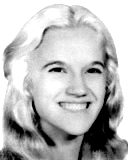

There’s a photograph that circulates online every so often. It shows a man with his arm around a young girl, both of them smiling for the camera like any ordinary father and daughter. Nothing about it looks unusual. That’s what makes it so hard to look at once you know the truth.
The man was Franklin Delano Floyd. The girl was not his daughter. Her name was Suzanne Marie Sevakis, and the story of what happened to her is one of the most disturbing cases in American criminal history — a story that took nearly forty years, two books, an FBI cold case unit, and a Netflix documentary to fully untangle.
A Little Girl Disappears
Suzanne Marie Sevakis was born on September 9, 1969. In the mid-1970s, her mother — a young woman named Sandi, who went by several last names over the years — married a man calling himself Brandon Williams. He was, in reality, Franklin Delano Floyd, a career criminal from Barnesville, Georgia, who was already wanted by federal authorities after skipping a court date on an earlier sexual assault charge.
In 1975, while Sandi was serving a short jail sentence for passing a bad check, Floyd vanished — and he took her four children with him: two young daughters, an infant son, and four-year-old Suzanne. He soon left three of the children behind, dropping the two girls at a children’s home and abandoning the baby boy. Suzanne, he kept.
He gave her a new name — Sharon Marshall — and began building a false identity for both of them. From that point on, she would grow up believing this violent, controlling man was her real father.
Growing Up as “Sharon”
By all outward appearances, “Sharon Marshall” was a remarkable kid. At Forest Park High School near Atlanta, she was a top student, served as a Lieutenant Colonel in her school’s ROTC program, and earned a full scholarship to study aerospace engineering at Georgia Tech. Classmates remembered her as warm and well-liked, even though she never seemed to stay anywhere very long and rarely let anyone get close.
Behind that image was a childhood of abuse. Friends who later spoke to investigators and documentary filmmakers described a home ruled by fear, and one high school friend recounted witnessing Floyd assault “Sharon” during what was supposed to be an ordinary sleepover. She was never allowed to simply be a teenager. She was never allowed to be herself, because “herself” was a person Floyd had erased.
Her scholarship never happened. During her senior year, she became pregnant by a boyfriend, and the two of them fled together to Alabama, trying to escape Floyd’s control. It didn’t last. She eventually left her boyfriend a note explaining that her “father” had come to take her home — and that was that. Floyd forced her to give up the child for adoption and the future she’d worked for. They resettled in Tampa, Florida, where she began working as an exotic dancer to support them both.
New Names, a Forced Marriage, and Two More Children
The reinvention continued. In Tampa, and later in Oklahoma, Floyd and Suzanne took on yet another set of identities — he became “Clarence Hughes,” she became “Tonya Hughes.” In 1988, she gave birth to a son, Michael Anthony Hughes. Floyd claimed the boy as his own son, though he was not biologically related to him. Not long after, Floyd forced Suzanne into marrying him — her kidnapper, the man who had raised her as his daughter since she was four years old, now legally her husband. The couple also had a daughter together during this period, a girl later known as Megan, who was likewise placed for adoption.
By the time they settled in Oklahoma City, “Tonya” was working as a dancer again, and coworkers there would later say Floyd’s jealousy and control never let up. Anyone who tried to encourage her to leave was met with threats — Floyd made it clear he would hunt her down if she ever ran.
The Hit-and-Run That Wasn’t What It Seemed
In late April 1990, a woman was found on the side of a road in Oklahoma City with severe injuries, apparently the victim of a hit-and-run. She was rushed to the hospital, where her husband, “Clarence Hughes,” soon arrived and identified her as 20-year-old Tonya Hughes. She died from her injuries days later, on April 30, 1990.
At the time, nobody knew who she truly was. Nobody knew her real name was Suzanne Marie Sevakis. Nobody knew the “husband” grieving beside her hospital bed was a federal fugitive who had kidnapped her as a small child. Investigators have long suspected Floyd was involved in her death, but he was never charged in connection with it, and officially, the case remains unsolved.
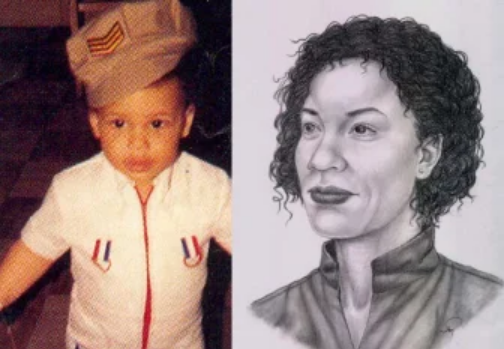
Her two-year-old son, Michael, went into the Oklahoma foster care system. He was placed with Merle and Ernest Bean, an experienced foster couple who cared for him for nearly four years and, according to people close to the case, had begun the process of formally adopting him. A blood test during this time confirmed what many had already suspected: Floyd was not Michael’s biological father. Still, he refused to let go.
A Six-Year-Old Vanishes From His Classroom
On September 12, 1994, Floyd walked into Indian Meridian Elementary School in Choctaw, Oklahoma, and demanded to see the principal, James Davis. He pulled a gun, forced Davis to take him to Michael’s first-grade classroom, and then forced both the principal and the boy into Davis’s own truck. He drove them out to a rural, wooded area, handcuffed Davis to a tree, and disappeared with Michael. Davis was found alive several hours later. Michael was gone.
For the next two months, the FBI searched for both of them. Floyd was finally arrested in Kentucky that November — alone. He offered no answers about where the boy was, at one point telling investigators it was “none of your business” where his son had been placed. Michael Anthony Hughes was never found. He was six years old.
Floyd was convicted of federal kidnapping charges for taking Michael and sentenced to more than 50 years in prison. Separately, forensic evidence eventually tied him to the 1989 murder of a young woman named Cheryl Ann Commesso, whose remains had been found near Tampa years earlier. Floyd was convicted of her murder in 2002 and sentenced to death.
The Confession, Twenty Years Later
For nearly two decades, two mysteries sat unresolved: who was “Tonya Hughes,” really — and what had actually happened to Michael? In 2011, the FBI and the National Center for Missing & Exploited Children reopened the cold case, driven in part by renewed public attention after investigative journalist Matt Birkbeck published A Beautiful Child, a book chronicling what was known of “Sharon Marshall’s” life.
In 2014, FBI agents Scott Lobb and Nate Furr sat down with Floyd on death row for a series of interviews. During those conversations, Floyd finally confessed to killing Michael on the very day he abducted him — shooting the six-year-old twice, he said, to make it quick. He also confirmed, at last, the identity he had spent nearly forty years hiding: “Tonya Hughes,” “Sharon Marshall,” was Suzanne Marie Sevakis, the daughter of the woman he’d married in the 1970s.
Investigators, working with University of Oklahoma anthropologists, searched a rural area based on Floyd’s account, hoping to recover Michael’s remains or any physical evidence. After 20 years, they found nothing — no bones, no shell casings, nothing to formally close the case. Michael Anthony Hughes remains missing to this day, his case still technically open, even though the FBI considers his death a certainty.
There was one piece of unexpected grace in an otherwise devastating story. Suzanne’s baby brother, taken and abandoned by Floyd back in 1975 and raised by an adoptive family with no knowledge of his origins, came forward in 2019 and submitted to DNA testing. It confirmed he was Phillip — Suzanne’s little brother, alive and found after more than forty years.
What Happened to Franklin Delano Floyd
Floyd spent his final years on death row at Union Correctional Institution in Raiford, Florida, still appealing his sentence, still largely unwilling to speak about the full truth of Suzanne’s death. He died there of natural causes on January 23, 2023, at age 79 — never executed, and never formally charged with killing the woman he’d spent her whole life controlling.
The case reached a wider audience in 2022 through the Netflix documentary Girl in the Picture, based on Birkbeck’s reporting, which reconstructed Suzanne’s life through the people who had known fragments of her — high school friends, coworkers, and eventually the biological family who never stopped wondering what had happened to her.
Why This Story Still Matters
It’s tempting to read a case like this and file it away as simply shocking — a strange, almost unbelievable string of aliases and coincidences. But underneath the twists is a much simpler, much sadder truth: a four-year-old girl was taken from her family, stripped of her name, and never given the chance to find out who she might have become. Everyone who loved “Sharon Marshall” or “Tonya Hughes” was, in some sense, denied the chance to know Suzanne Sevakis at all.
Her son Michael has still never been found. Her case is still, officially, unsolved. And the photograph that started it all — a man with his arm around a smiling little girl — is one of the only honest things left of a life built almost entirely on lies that weren’t hers to tell.
Credit by: chik File A